8 September 2026
Your miniature, painted properly.
You spent hours on that miniature. The glue, the primer, the thin coats, the wash in the recesses, the dry-brush on the edges. And now it sits on a shelf, or worse, in a box, where nobody sees it. We turn the photo you took of it into a painting you can hang on the wall. Here is how the process works, what it costs, and what makes a good source photo.
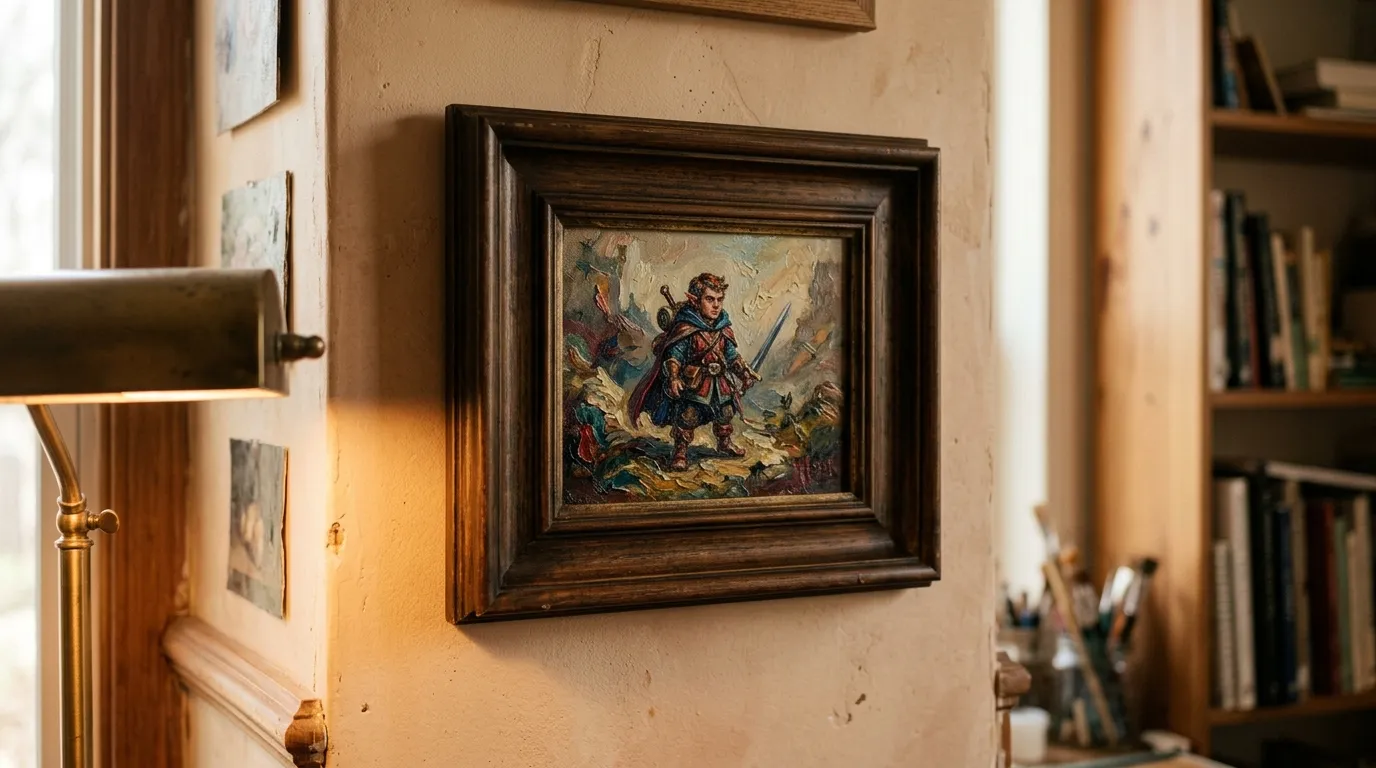
You spent hours on that miniature. The glue, the primer, the thin coats, the wash in the recesses, the dry-brush on the edge highlights. And now it sits on a shelf, or worse, in a foam-lined box, where nobody sees it except you and the cat.
We turn the photograph you took of it into a painting you can hang on the wall. Not a filter. Not a photo printed on canvas with a texture overlay. A genuine restyle: the AI reads the shapes, colours and detail in your photo and repaints it in the style you choose, at print resolution, from scratch. The result looks like somebody sat down with a brush and painted it — because in a sense, somebody did. You painted the original. The AI painted the interpretation.
How the process actually works
The process is three steps, and the middle one is where the work happens.
Step one: upload a photo. Any photo of your painted miniature works, but some work better than others. The photography guide covers the lighting, the backdrop and the angle that produce the best results. The short version: good light, plain background, fill the frame.
Step two: choose a style and approve the render. The AI restyles your photo in the style you selected. You get a watermarked preview at screen resolution. If the render is wrong — the colours drifted, the detail is mushy, the composition lost something — generate another. You get three free previews per day, no account needed, no card needed. When one of them is right, you tick the box against that specific render. That tick is what unlocks the basket.
The tick matters more than it sounds. The render you approve is the render we print. After payment the same composition is re-rendered at full print resolution — typically 4K — from the composition you accepted, not from the original prompt being run again. You are not gambling on a different picture arriving.
Step three: it arrives. Made to order in the UK, printed and framed, delivered to your door. Four to nine working days on a normal week.
The styles available
Four styles, each with a different character:
Oil painting. The heaviest style. Thick visible brushwork, deep colour saturation, the kind of rendering that looks like it took weeks on a canvas the size of your wall. Suits miniatures with strong colour contrast and dramatic lighting — a red cloak against a dark background, a gold trim catching the light.
Watercolour. The loosest style. Washes and bleeds, white paper showing through, soft edges where the colour pools. Suits miniatures with natural palettes — earth tones, greens, weathered metal. A watercolour of a mud-caked infantry miniature reads as a study, not a product shot.
Line art. The cleanest style. Continuous line drawing, no shading, no colour — just the shapes described in ink. Suits miniatures with strong silhouettes and clear profiles. A line art print of a character miniature reads as a design sketch.
Vintage poster. Flat lithographic colour, limited palette, hard diagonal composition. The style of 1930s travel advertising. Suits miniatures with bold, graphic colour schemes. The paint scheme guide covers which combinations work best.
What makes a good source photograph
The AI can only work with what the photo gives it. A blurry photo produces a blurry painting. A dark photo produces a dark painting. The three things that matter most:
Light. Diffused daylight is best — a window, not a lamp. Direct light creates hard shadows that the AI reads as black shapes. The photography guide covers three lighting setups in detail.
Background. Plain and uncluttered. A white paper sweep, a lightbox tent, or a plain-coloured card. The busier the background, the more the AI has to interpret, and the more likely the render drifts. The backdrop guide covers three rigs.
Focus. The miniature should be sharp. Not the background, not the table — the model. A phone camera on macro mode, held steady, is enough. The display guide covers how to pose the miniature for the photo.
What arrives
Eight formats, each at print resolution, each made to order:
Framed print. From £69.00. Wood frame in black or natural, plexiglass front, ready to hang. The heaviest and most finished format.
Canvas. From £81.00. Stretched over a wooden frame, no glazing, no reflections. The best format for a painting-style render because the weave adds texture that suits the brushwork.
Metal print. From £28.99. Aluminium panel, dye-sublimation print, the colours are the most vivid of any format. Suits bold, graphic renders.
Wood print. From £28.99. Plywood panel, the grain shows through the print. Suits natural-palette miniatures.
Poster. From £16.99. Unframed, 250 gsm uncoated archival stock. The most affordable format and the easiest to frame yourself.
Mug, water bottle and greeting cards. From £14.99. For the gift that is not a wall print.
Every format is made to order. Nothing exists until somebody buys it, which is why there is no dead stock and no discounting.
Why not just take a better photo?
A good photo of a good miniature is worth framing on its own. We think so too — the photography guide exists because the photo matters. But a photo is a record. A painting is an interpretation. The AI restyle reads the shapes and colours in your photo and makes creative decisions about brushwork, composition and emphasis that a photograph cannot make. It is the difference between a snapshot of a good meal and a painting of it.
If that sounds like the kind of thing worth hanging, upload a photo and see. The preview is free and the render is yours to judge.
Frequently asked
How does the miniature photo to painting process work?
+
Upload a photo of your painted miniature. The AI restyles it in the style you choose — oil, watercolour, line art or vintage poster. You get a free watermarked preview. When you approve a render, we print it at full resolution and deliver it framed or unframed. Three free previews per day.
What photo should I use for my miniature?
+
A sharp, well-lit photo with a plain background. Diffused daylight from a window, a white paper sweep or lightbox, and the miniature filling the frame. The photography guide covers three lighting setups.
What styles are available for miniature prints?
+
Four: oil painting (thick brushwork, deep colour), watercolour (washes and bleeds), line art (continuous line, no shading), and vintage poster (flat lithographic colour, limited palette). Each suits different miniature colour schemes.
What formats can I get my miniature print in?
+
Eight: framed print from £69, canvas from £81, metal from £28.99, wood from £28.99, poster from £16.99, plus mug, water bottle and greeting cards. All made to order in the UK.
How long does a miniature print take to arrive?
+
Four to nine working days from order to delivery on a normal week. The print is made after the order, which is why there is a production window rather than a next-day promise.