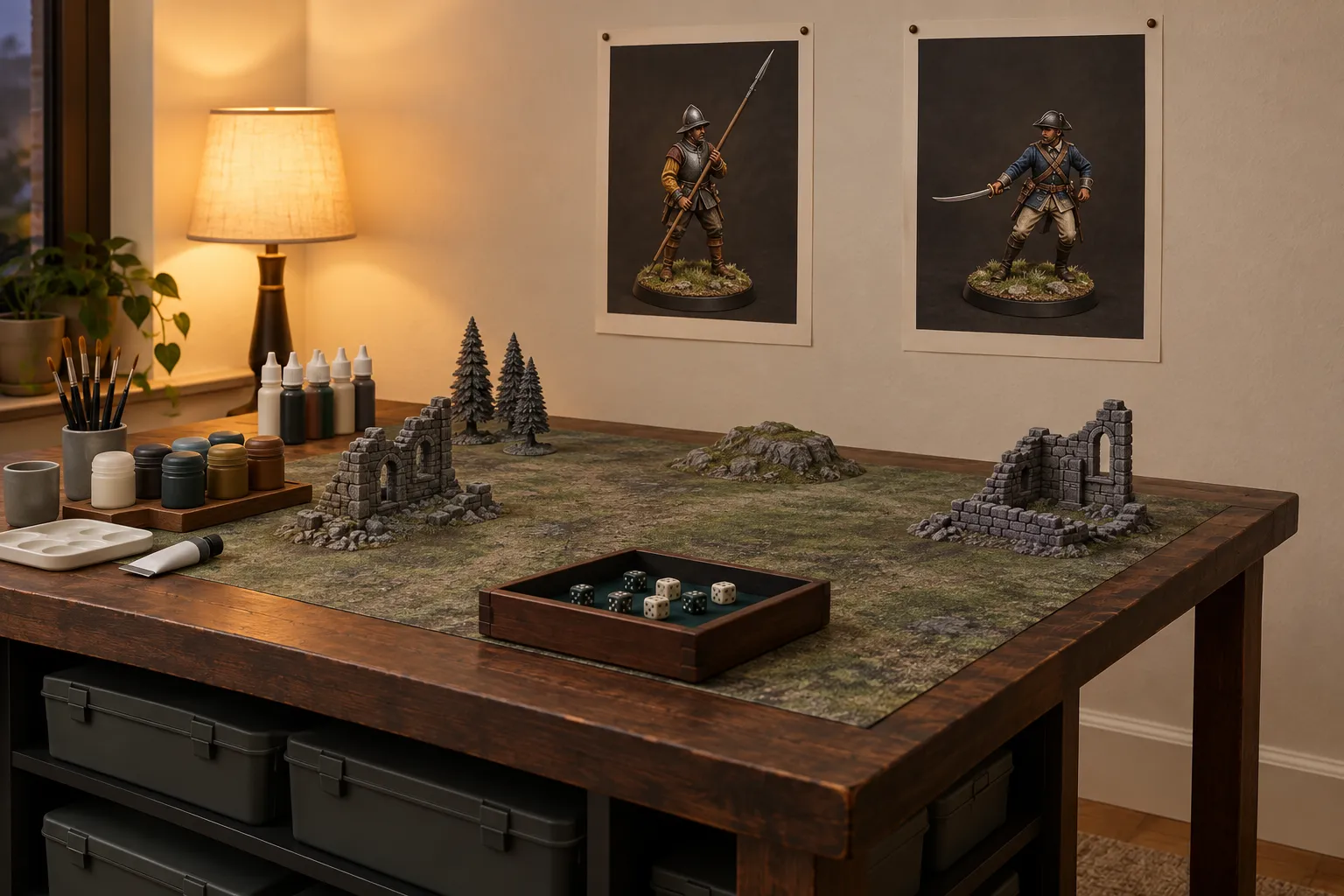
Hobby room ideas, starting with the bench
Hobby room ideas usually begin with furniture and end with a room that looks tidy and is miserable to work in. The order that works is the opposite: get the bench and the light over it right first, because everything else is decoration around a place you sit for hours.
A hobby room has one job and it is not to photograph well. It has to be somewhere you can sit down for two hours without your neck hurting, find the thing you put down ten minutes ago, and see what you are doing.
The bench, and the depth nobody plans
Depth matters more than width. A deep desk collects a graveyard at the back that you can neither reach nor clear, and the usable area shrinks to a strip at the front. Something shallower with a shelf above it gives you the same footprint and keeps everything within arm's reach.
Height is the other one. A normal desk is built for a keyboard, and painting or building at that height rounds your back for the whole session. Raising the work rather than lowering yourself — a board, a box, anything that brings the piece up towards your eyeline — is free and fixes most of it.
Light it like a workshop, not a lounge
One ceiling light puts your own shadow on whatever you are doing, which is exactly backwards. You want a directional light coming across the work from the side, close, and bright enough that you are not leaning into it.
Colour temperature is worth caring about if you paint. A warm bulb shifts everything, and colours mixed under it look wrong in daylight. Something neutral is easier to trust, and it means the photograph you take later matches what you saw.
Small hobby room ideas, where the space is a corner
Most of these rooms are not rooms. They are a corner of a bedroom, half a landing, or a desk that has to be cleared before dinner.
- Go vertical. A shelf above the bench and a rail with hooks converts wall into storage without taking floor.
- Make packing up one movement. If clearing the desk takes ten minutes, you will stop starting. A tray that the whole works-in-progress lives on can be lifted off in one go.
- Keep one thing out permanently. A corner that is entirely cleared reads as "not a hobby space" and it gets colonized. One finished piece left out defends the territory.
Storage that you will actually put things back into
The test of any storage in a working room is whether putting something away is faster than putting it down. Anything that needs a lid opened, a box lifted and a gap found will lose to the desk every time, and the desk fills up.
Open trays, a rack with the brushes standing up, jars you can reach without looking: none of it photographs as well as closed drawers and all of it survives contact with a real session. Tidy rooms in pictures are tidy because nobody has worked in them that week.
Where the finished things go
The failure state is universal: unfinished work covers the desk, finished work is in a box. Reverse it. Anything done comes off the bench that evening, and the bench holds only what is in progress.
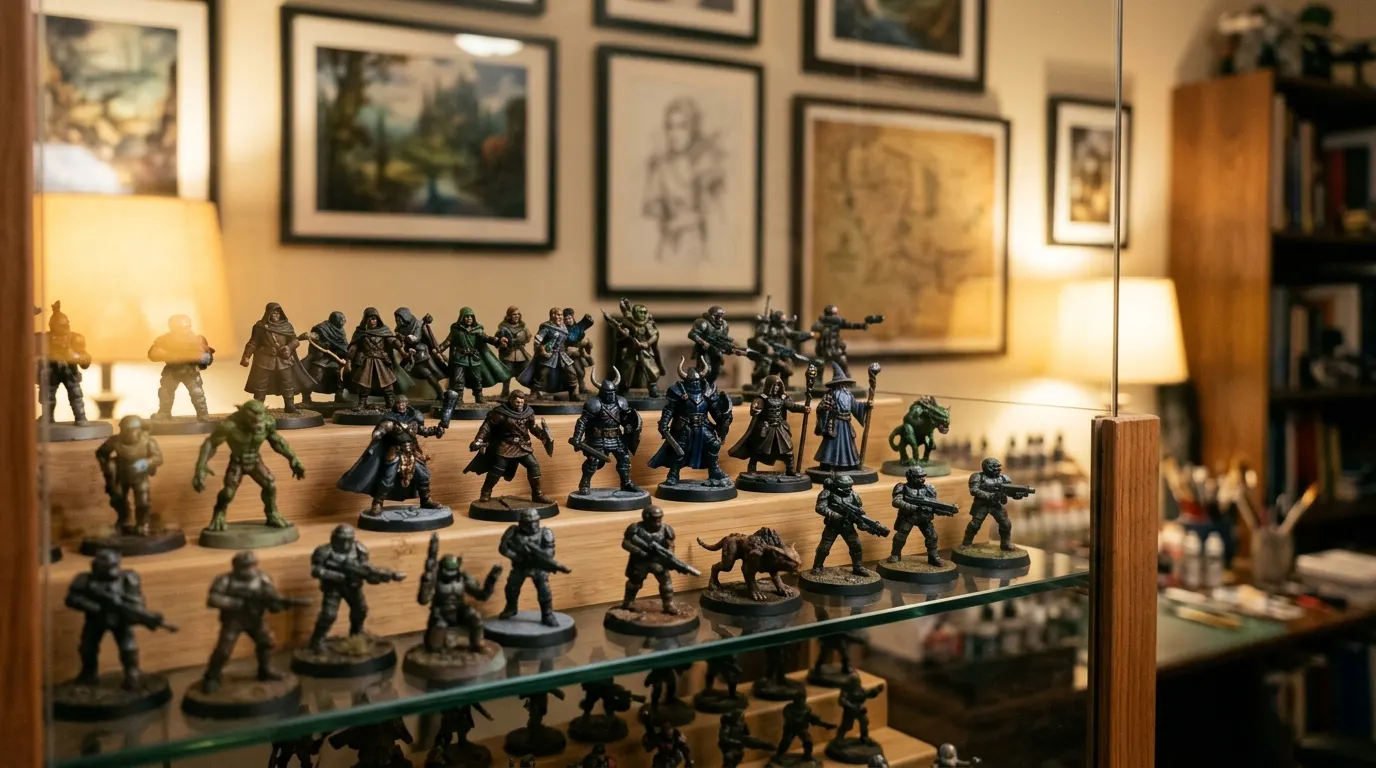
That works until the box is full, which is the point at which a wall starts earning its keep. The display guide compares cases, shelves and drawers, and is honest that most of a collection is stored rather than shown.
What belongs on the wall
The wall in front of the bench is the one you look at most and the one most likely to be bare or covered in reference printouts. One piece of your own work does more for a room than any amount of bought decoration, and unlike anything bought for the purpose, it could not have come out of another room.
For a room that is also a gaming room
If the same space has a table in it, the two uses fight over light: painting wants bright and directional, playing wants even and comfortable. Two separate lamps beat one compromise. The gaming room guide covers the table side of it.
Compare the available sizes and prices before ordering. Free UK delivery is included in every price.
Good to know
What should I get right first in a hobby room?
The light over the bench and the height you work at. Both cost little, and together they decide whether you can sit there for two hours.
How do I set up a hobby space in a corner?
Go vertical with a shelf and a rail, make packing up a single movement so you keep starting, and leave one finished piece out permanently so the corner stays yours.
Should the desk be deep?
Shallower than you think, with a shelf above. A deep desk grows a graveyard at the back that you can neither reach nor clear.