Painted miniatures: what to do once the army is finished
Painted miniatures almost all end the same way: months of evenings, a finished force, and a foam tray in a cupboard. The painting gets celebrated for about a week, on a table, by the three people who were there.
Brush & Paint has no connection to Games Workshop and sells nothing of theirs. What follows is about your own models and your own photographs of them, whatever system they were painted for.
The problem is structural rather than anybody's fault. Models are made to be transported and played with, so they live in foam; foam lives in a case; the case lives in a cupboard. The better you paint, the more of your work is in a cupboard.
Decide which one piece is the showcase
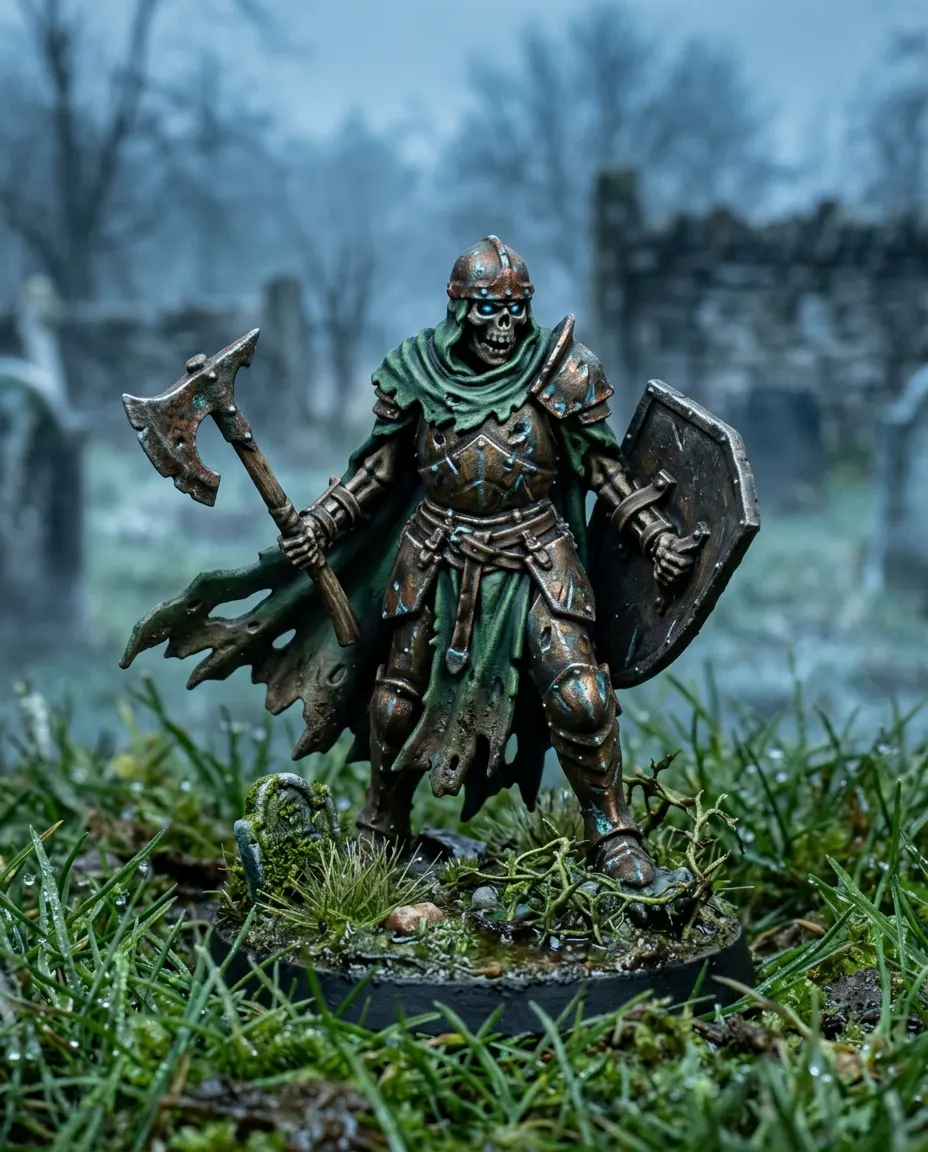
An army is not a showcase, it is an inventory. Nobody looks at forty figures; they look at one and then glance at the rest. So pick the one — the character you converted, the unit champion you spent a whole weekend on, the piece where the freehand came out right — and treat everything else as context.
Most painters know immediately which one it is. If you do not, it is the one you photograph first when somebody asks.
Painted Warhammer, and everything else on the shelf
Warhammer is where most people meet this problem, because the game is built around armies and an army is a lot of models. But nothing about the situation is particular to it. A skirmish warband, a historical regiment, a board game’s plastic that somebody bothered to paint and a single display piece that belongs to no system all end up in the same cupboard for the same reason.
So read everything here as being about whatever you painted. The photography does not change, the printing does not change, and the decision about which single piece is the showcase does not change either.
Photograph it like it matters
This is the step that decides everything downstream, and it takes ten minutes. Three things go wrong and all three are free to fix.
- The light is behind you. Move it to the side and diffuse it through a sheet of paper. Edge highlights and freehand vanish under a hard frontal light, which is exactly the detail you want to keep.
- The phone cannot focus that close. Back off and crop in afterwards rather than pushing the lens to its minimum distance, where everything goes soft.
- The background is a cutting mat. A sheet of plain card behind and under the model removes every distraction and costs nothing.
The photography guide goes through it properly, and the backdrop guide covers what to put behind the figure once the basics are right.
Print the one, not the forty
A photograph of a single figure at A3 is the model at a size where the brushwork reads — larger than the model, in fact, which is the point. Nobody has ever seen your painting at that scale, including you.
What about the whole army?
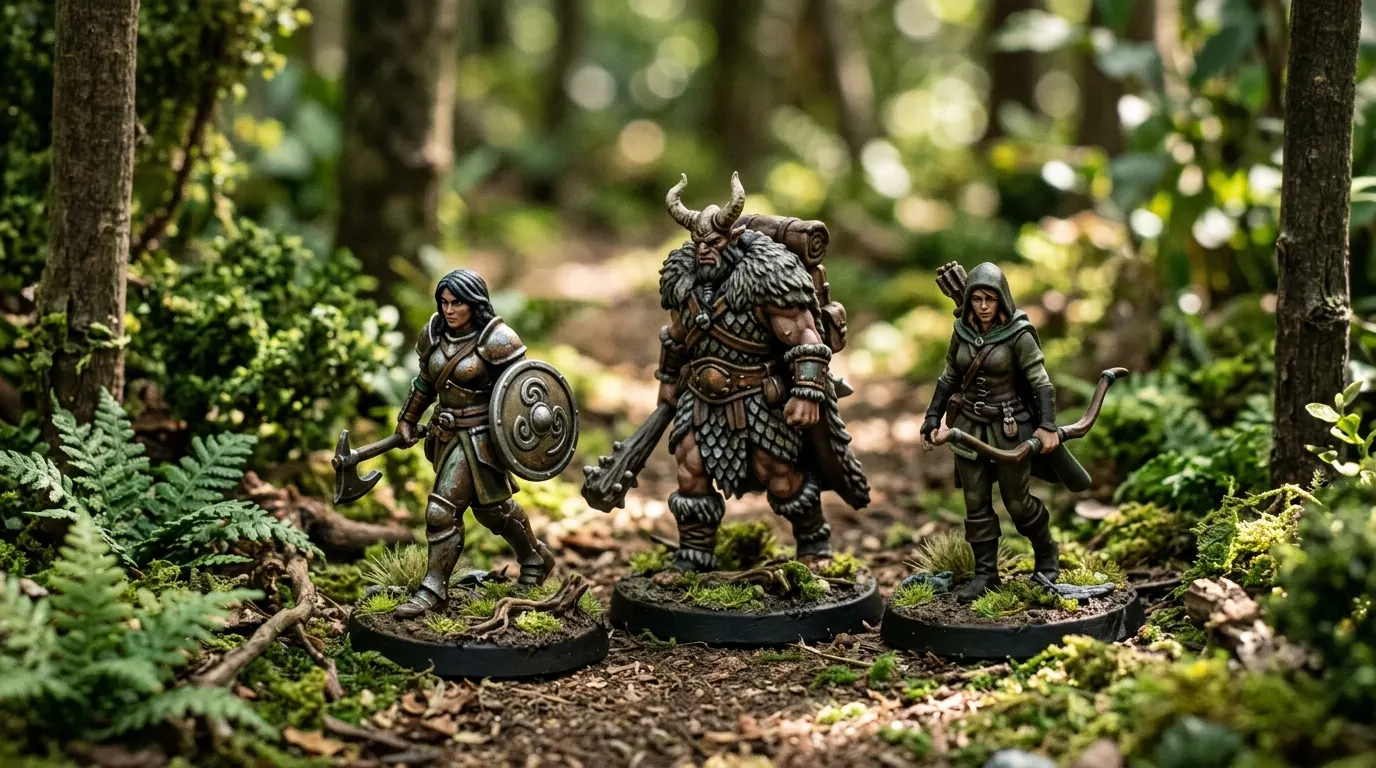
A group shot is a different photograph with different rules, and it is worth taking even though it is harder. Shoot it from roughly the height a person standing at a table would see, not from directly above, so the front rank overlaps the back one and the force reads as depth rather than as a grid. Then expect to print it larger, because a wide shot at A4 turns every figure into a smudge.
Realistically: print the single figure, and keep the group shot for the group chat. That division matches how people actually look at both.
Showing it to other people
If you post the work, post the photograph rather than a snap of the tray, and say what you were trying to do with it. Painters are a generous audience for process and a thin one for "finished my army". The same photograph that makes a good print makes a good post, which is a reason to take it once and properly.
Painted miniatures from any system
Nothing above is specific to one game. The same applies to a skirmish warband, a historical regiment, a board game's plastic that somebody bothered to paint, or a single display piece that belongs to no system at all. The scale converter is used by people playing all of them: the miniature scale converter turns a ratio into millimetres if you are building terrain or a base to match.
Compare the available sizes and prices before ordering. Free UK delivery is included in every price.
Learn from other miniature painters
NOVA Open’s Capital Palette is a miniature-art competition with examples of the wider painting community. Check organisers’ current rules before entering your own work. For a home display, compare cases, shelves and prints, or prepare a miniature art print from your own photograph.
Good to know
What should I do with a painted army I never see?
Pick the single best figure, photograph it properly, and print that one. Forty models cannot go on a wall; one can, and it is the one people actually look at.
How do I photograph painted miniatures well?
Light from the side and diffused, not from behind the camera. Back off and crop rather than pushing the phone to its minimum focus distance. Plain card behind and under the model.
Is it worth printing a whole-army group shot?
Only large. A wide shot at A4 turns every figure into a smudge. Shoot it at table height so the ranks overlap, but print the single figure and keep the group shot for sharing.
Does this apply to other games?
All of them. Nothing here is specific to one system — it works the same for a skirmish warband, a historical regiment or a single display piece.