How to make art prints of work you already have
How to make art prints comes down to three things in order: a clean digital copy, a size the file can carry, and a paper that suits the work. Most people start at the third and are then disappointed by the first.
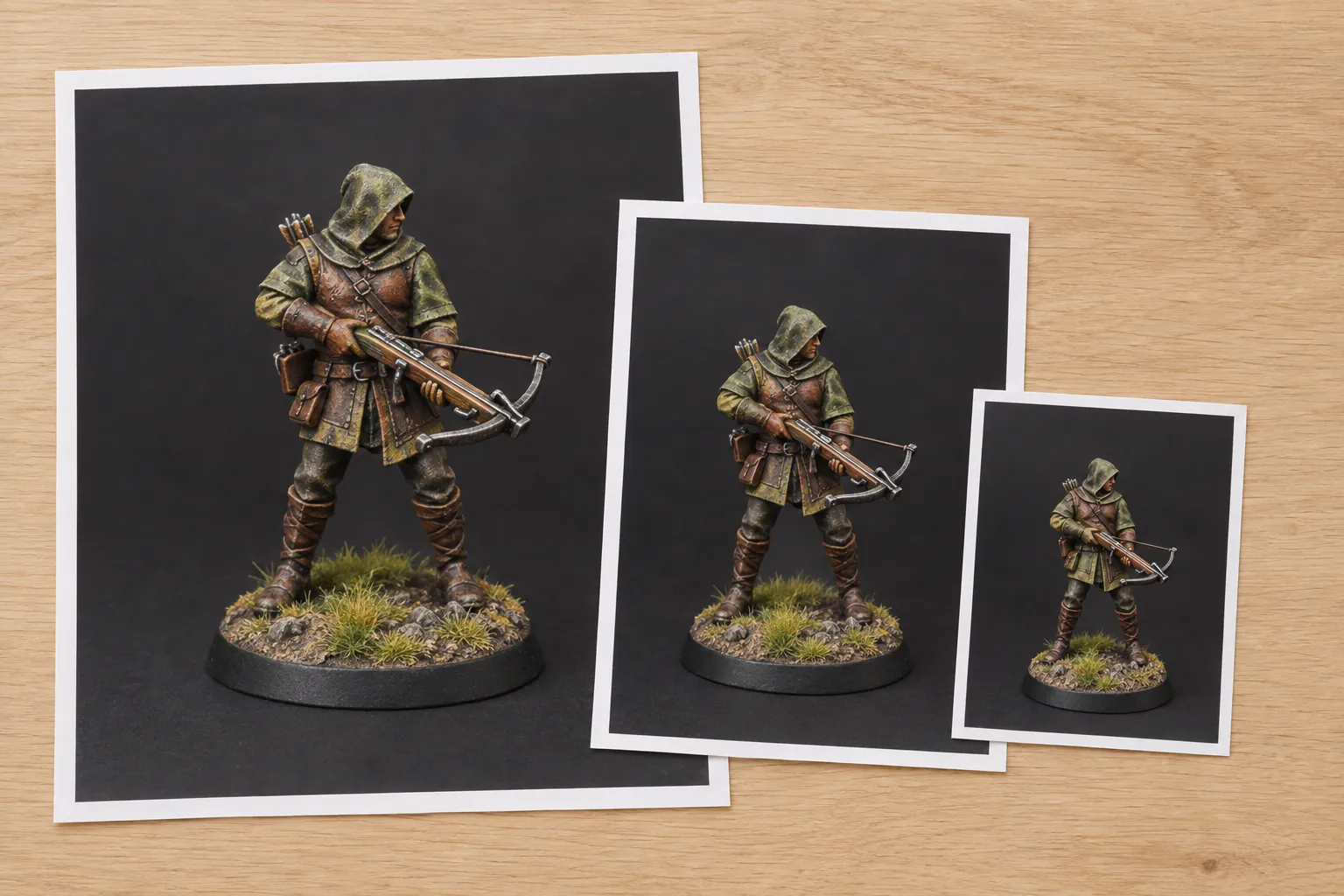
Everything downstream depends on the copy. A perfect paper choice cannot rescue a photograph taken at an angle under a ceiling light, and no amount of editing puts back detail that was never captured.
Get a copy worth printing
Flat, square to the camera, evenly lit, and colour you can trust. The artwork photography guide covers all four, and it is worth reading before you take the picture rather than after.
If the original is digital you can skip this entirely - but export at full size rather than at whatever the last upload needed.
Work out what size the file will carry
Your maximum size falls out of one division: the pixel count over the dpi gives you inches. So at 300 dpi an A4 needs 2480 × 3508 pixels, an A3 needs 3508 × 4961, and an A2 needs 4961 × 7016.
Treat 300 dpi as a habit for work held close rather than a requirement. Something big, read from the other side of a room, is fine at half that — and halving the dpi halves every pixel count above. The paper sizes pages set out every size with its pixel count, and our upload step measures your actual file and withdraws any size it would not print sharply - so the decision is made for you if the file cannot reach.
How to make art prints on the right paper
Match the surface to the marks. Uncoated matte paper suits pencil, ink and line work, because nothing competes with the detail. Coated stock lifts saturation and suits photographs and dense digital colour. Canvas suits things that were painted, because the weave returns some of the texture the original had.
Our posters are 250 gsm uncoated off-white archival paper; the format guide compares it against canvas, metal and wood.
Editions, numbering and whether to bother
An edition is a promise about scarcity: fifty prints, numbered, and no more ever. It is a real commitment and it is worth something to collectors, which is why it should not be made casually - you cannot quietly print more later without it being a lie.
Open editions have no such limit and no such promise. For most people selling occasionally, open is the honest and simpler choice, and nobody is misled.
Pricing, and the sum people skip
Work out the print cost, the packaging, the postage and the platform fee, add them up, and only then decide what the work is worth on top. The mistake is pricing against what other people charge before knowing what a sale actually leaves you.
Smaller sizes sell more often and earn less each. That is not a problem to solve, it is just the shape of it - and it is why a range of sizes usually beats one.
Signing and packing
Sign in pencil in the margin rather than in ink on the image, which is the convention and is also reversible. If the print is an edition, the number goes on the opposite side of the margin.
Pack flat in board rather than rolled in a tube where you can. Rolled prints arrive with a curl that the buyer has to deal with, and a flat package is the difference between an object and a chore.
Selling art online without a shop
Print to order rather than holding stock. Unsold boxes of prints are how people lose money on this, and made-to-order removes the risk entirely at the cost of a slightly lower margin, which is a trade worth making until you know what sells.
Compare the available sizes and prices before ordering. Free UK delivery is included in every price.
Good to know
What resolution do I need to make art prints?
At 300 dpi: 2480 × 3508 pixels for A4, 3508 × 4961 for A3, 4961 × 7016 for A2. At 150 dpi, which is fine for something viewed from across a room, halve each figure.
What paper is best for art prints?
Uncoated matte for pencil, ink and line work; coated for photographs and dense digital colour; canvas for work that was painted. Match the surface to the marks.
Should I do a limited edition?
Only if you mean it - an edition is a promise you cannot quietly break by printing more later. Open editions are honest and simpler for most people selling occasionally.
How should I price an art print?
Add up print cost, packaging, postage and fees first, then decide what the work is worth on top. Pricing against other people before knowing what a sale leaves you is the usual mistake.