Man cave ideas for a room that shows what you do
Most man cave ideas end at buying things that announce the room is a man cave: a neon sign, a framed film poster, a metal plaque about beer. A room built that way looks like every other one, because everything in it came from the same shops.
Jump to a section · 6 sections
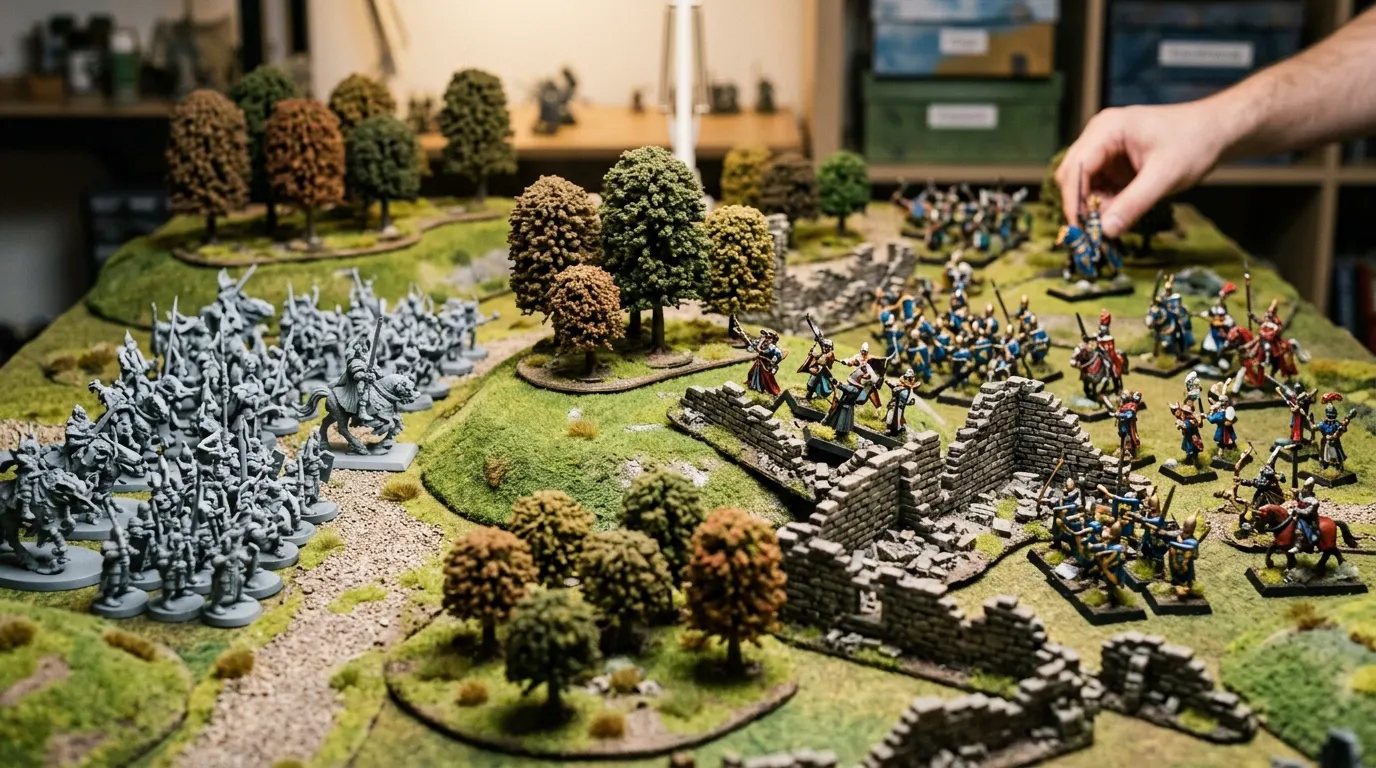
The difference between a room that works and a room that looks like a catalogue is whether anything in it could only be in that room. A bought sign could be anywhere. A photograph of the thing you finished last winter could not.
So the useful version of this isn't a shopping list. It is four decisions about a space, in the order they actually matter.
Start with the wall you look at
Every room has one wall your eyes land on when you sit down, and it's usually not the one people decorate. Work out where you actually sit (at the bench, in the chair, at the desk) and treat the wall in front of that as the one to get right first. The others can stay bare for a year without much being lost.
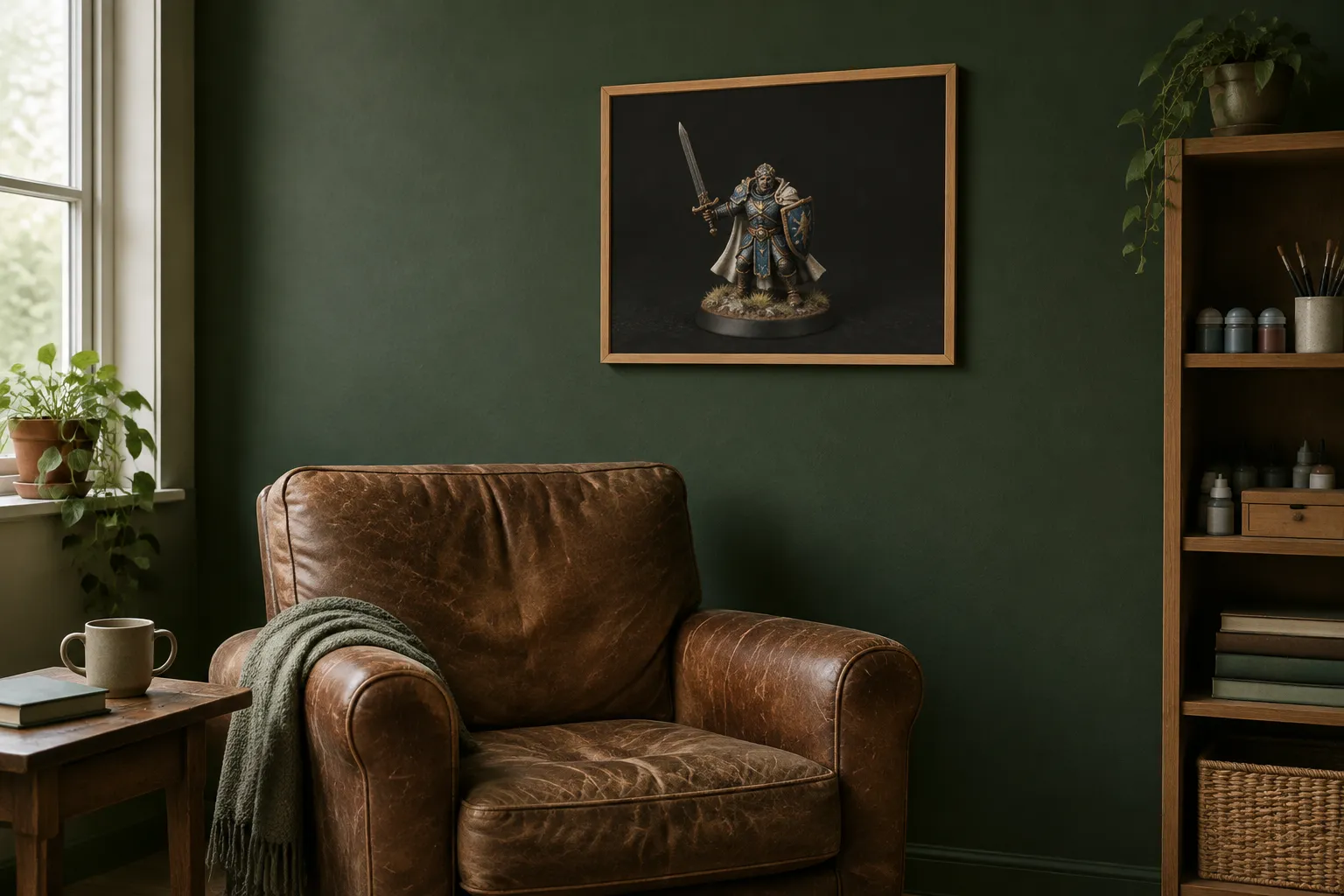
On that wall, one large piece beats four small ones. Something at A2 or larger reads as deliberate; a scatter of A4s reads as things that happened to get framed. If the room is small, that is an argument for one A3, not for nothing.
Put your own work on it
The piece that belongs there is something you made: a model you painted photographed properly, a drawing, a scene you built. It is the one object in the room that no one else can have, and it changes how the room reads from "he likes this stuff" to "he does this stuff".
Light the room twice
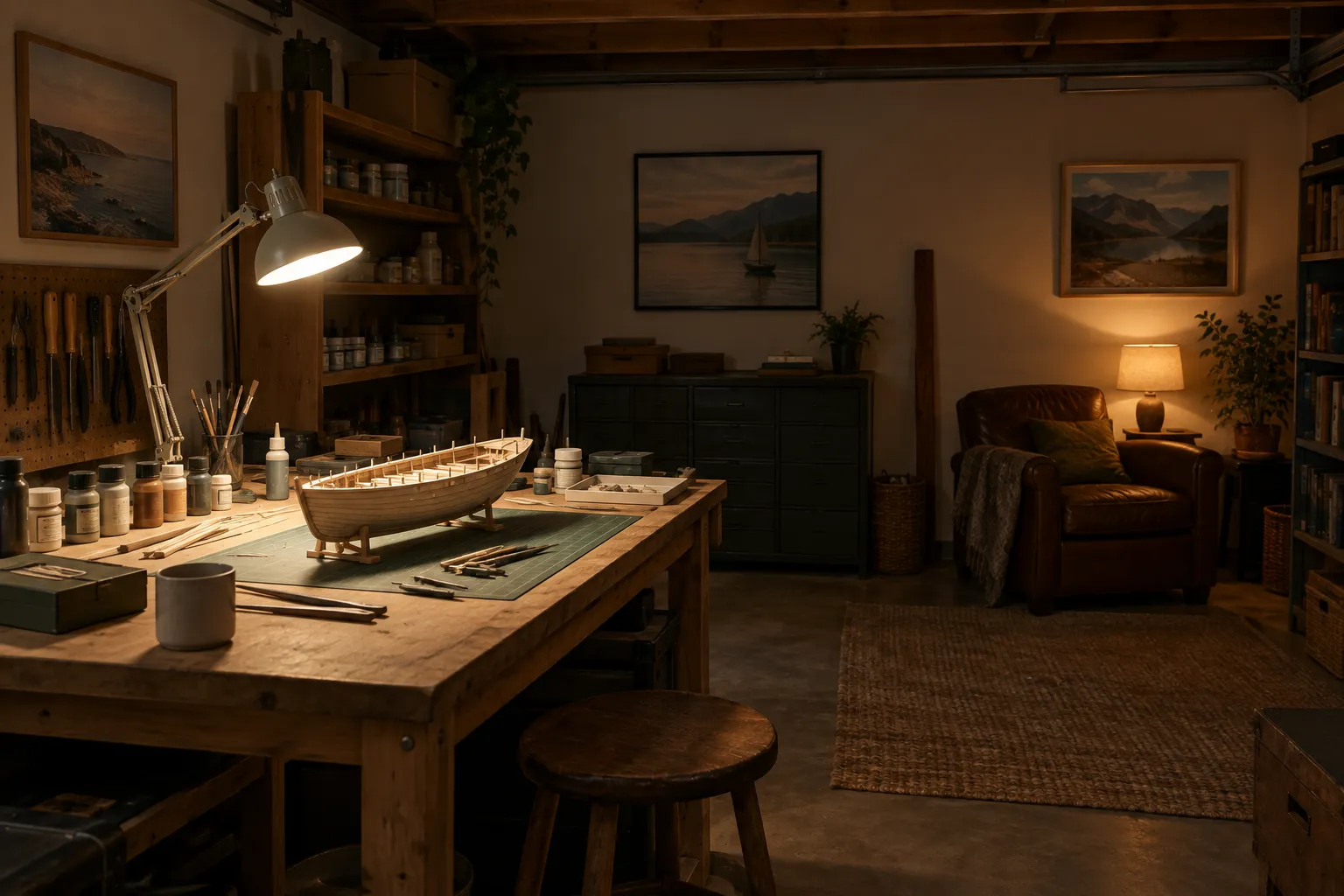
One overhead light makes any room look like a garage, which is the single most common thing wrong with these spaces. You want a bright directional light where the work happens and a softer, warmer one everywhere else, so the room has somewhere to be and somewhere to sit.
If you paint or build in there, the light over the bench isn't decoration, it is equipment, and it should be the thing you spend on before anything goes on the wall.
Give the finished things somewhere to be
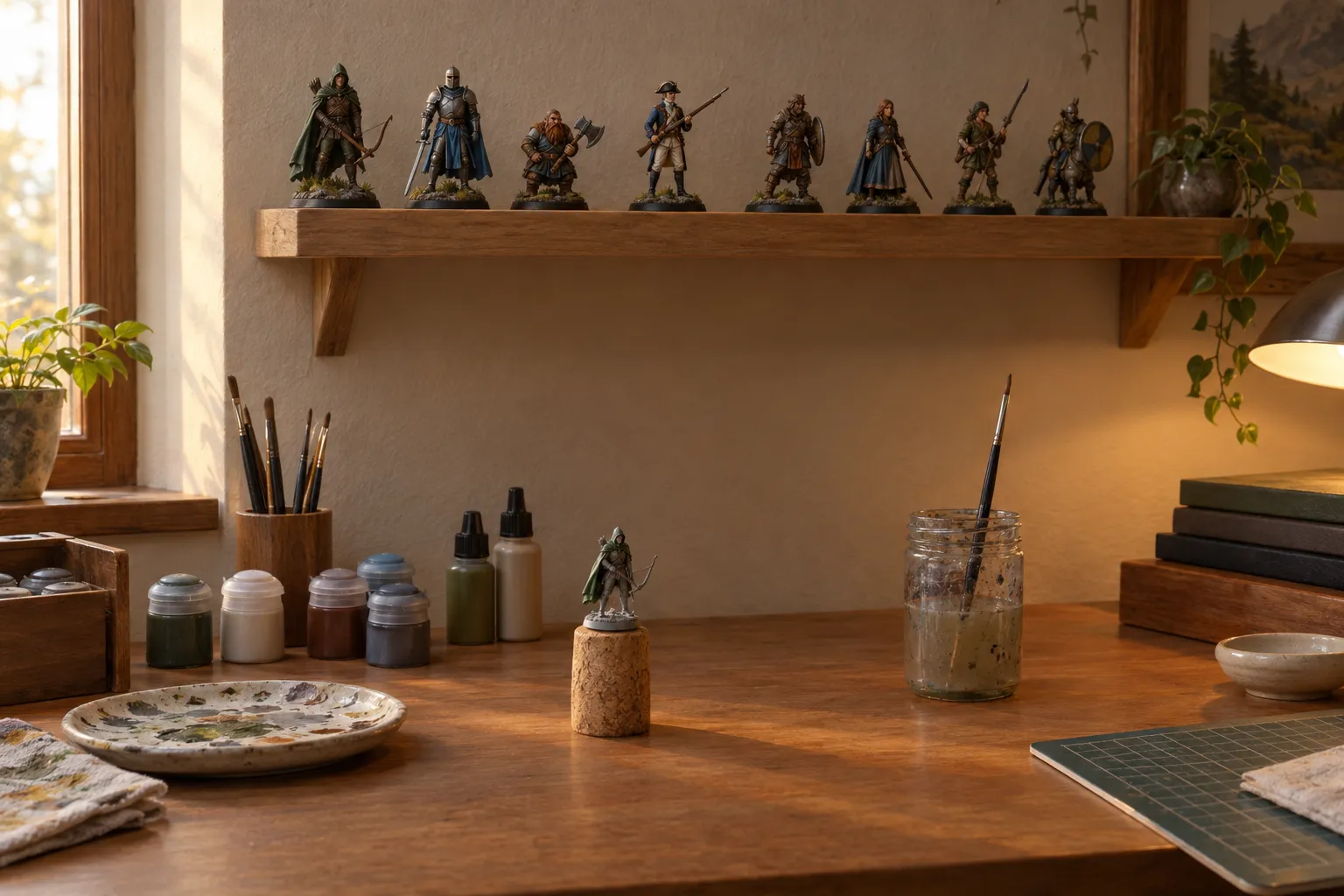
The failure state of a hobby room is that everything finished ends up in a box and everything unfinished ends up on the desk. Reversing that is most of what makes the room pleasant: shelf or case for the done, one clear working area for the in-progress.
Things that won't fit in a case are exactly the things worth printing, which is the point where a room and a wall start solving each other. The hobby room guide covers display and layout in more depth, and if you are sizing a piece for a particular wall, the paper sizes give you the millimetres.
Man cave ideas that cost nothing at all
Two of the four decisions above are free. Moving the chair so you face the wall worth facing costs nothing. Clearing one working area and putting the finished things somewhere else costs nothing either, and it's the change people notice most when they walk in.
A third is nearly free: take the clutter off the wall you look at and leave it empty for a week. An empty wall is uncomfortable enough that you'll actually decide what belongs there, which is a better process than filling it gradually with whatever arrives. By the end of the week you usually know which piece it should be, and it is usually something you already own.
What to leave out
Anything that is only a reference. A sign that names a thing you like is weaker than an object from the thing you like, and a room full of references is a room full of other people's designs. One good piece of your own does more than six bought ones, and it costs less than the neon.
The test, if you want one, is whether a visitor could work out what you actually do from standing in the middle of the room. A wall of bought signs tells them what you consume. One photograph of something you finished tells them what you make, which is the more interesting fact about anybody.
Questions and answers
One big print or several small ones?
One large piece reads as deliberate; a scatter of A4s reads as accidental. A2 or larger if the room allows, A3 if it is small.
What goes wrong most often in a room like this?
In the ones we see, two things: a single overhead light, and walls filled with bought signs, not anything made in the room.