Fantasy town name generator
This town name generator builds fantasy town names from the same parts real English place names are made of: a word for what was there, then an ending for what people did with it. A ford, a farm, a fort, a harbour. Press the button for twelve, or narrow it to one kind of place.
Choose traditions, length or first letter (optional)
Suggestions, nothing more. The parts are real Old English and Old Norse place-name elements and plain words, so some results will match real villages, which is half the point. Every name the banks can build is also checked against a list of places from published settings. These patterns reach 11,025 distinct names. It will not run out.
Named them? Now put them on the wall
Upload a photo of the painted figure. Choose Create a scene and AI redraws it in a setting of its own, or print the photo as it is. You see it before you pay, and it goes in your basket from here.
Jump to a section · 5 sections
A good fantasy town name sounds worn smooth, as if people have been saying it for a thousand years. The easiest way to get there is to build it the way English places were named: a first part for what was there, and an ending for what people did with it. Kirk and by give you Kirkby, the village with a church. It’s a real place, and it still says what it was.
How the town name generator builds a place
There are four kinds of town in the banks. Farms and fords join an Old English first element such as Stan or Brock to an ending like ley or ford, sometimes with Little or Chipping in front and sometimes with a river after: Brockley, say, or Stanford-on-Lune. Norse villages use by, thorpe, thwaite and dale. River and coast towns end in mouth, haven, staithe or ferry, and fortress towns take bury or keep.
Untick the kinds you don’t need. A map of one coastline might only want ports, while a border march might want nothing but forts.
What the endings meant
Most of these endings were ordinary words once. Place-name scholars give the commonest these meanings:
- -ham, Old English: a homestead.
- -ton, Old English: a farmstead or enclosure.
- -ford, Old English: a place to cross a river.
- -ley, Old English: a clearing in woodland.
- -bury, from Old English burh: a fortified place.
- -chester and -caster, from Latin castra by way of Old English: a Roman fort.
- -by, Old Norse: a farm or village.
- -thorpe, Old Norse: an outlying farm.
- -thwaite, Old Norse: a clearing or meadow.
So a name can tell a story about the land before anyone has written a line of history. In your world a Coldwell can be the village by a cold spring and an Oakham the homestead in the oaks. Players will rarely ask, but the map feels consistent because the names are.
Norse names in the north and east
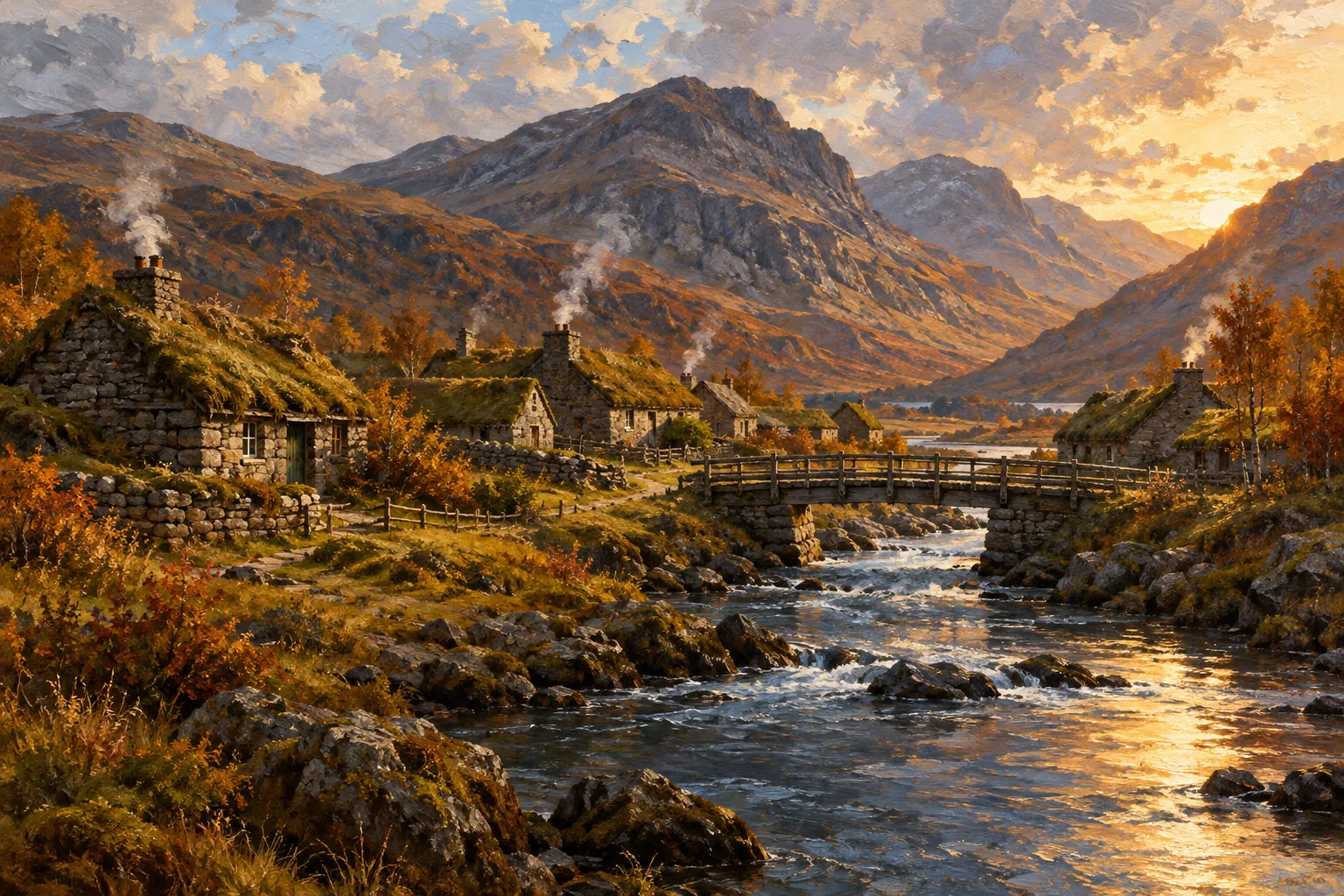
Names ending in -by and -thorpe cluster in Yorkshire, Lincolnshire and the East Midlands, the parts of England where Scandinavian settlers made their homes in the ninth and tenth centuries. That hands a fantasy map a cheap and effective trick. Put the Norse endings in one region and the Old English ones in another, and it looks as if two peoples settled the land at different times. You don't need a history lesson to feel it.
Making a fantasy town name of your own
Decide what the place is for before you name it. A crossing wants -ford or -bridge, a port wants -mouth or -haven, and a town that grew up round a castle wants -bury or -keep. Then take a first part from the land around it: a tree, an animal, a colour, a stone. Real names wear down with use, so squash the result until it’s comfortable to say. Stanton started out as a farmstead on stony ground; people only ever say the short version.
If two places on your map share a name, do what England did and add a word: Great and Little, or Upper and Lower. Chipping marks the one with the market, from the Old English word for a market, as in Chipping Norton.
Names that fit the map
Name the rivers first, then the towns on them, and the map holds together. If you’re drawing the walls and towers as well, how to draw a castle takes a keep from rough masses to battlements in twelve steps. For the people who live there, the fantasy name generator builds characters from the same kind of banks.
Questions and answers
How do you come up with a fantasy town name?
Decide what the place is, then build the name from two parts: something from the landscape and an ending that says what stood there. Ford for a crossing, mouth for a river mouth, bury for a fort and thorpe for an outlying farm. Squash the result until it sounds as if it has been said for centuries.
What are some good fantasy town names?
Names that sound used. From the generator: Brockley, Gunnthorpe, Wendmouth, Highcaster, Little Elmham and Stanford-on-Lune. Each press gives twelve more across farms, Norse villages, ports and fortress towns.
What does -by mean at the end of a place name?
It comes from Old Norse and means a farm or village. Place names ending in -by are common in the parts of northern and eastern England where Scandinavian settlers lived, such as Yorkshire and Lincolnshire.
Are any of these real places?
Some will be, because the parts are real: Kirkby and Askrigg, for instance, both exist. If you need a name no one else uses, search for it before you put it on a map you plan to publish.