What is giclee, and does the word mean anything?
What is giclee, spelled giclée when anyone is being careful? It is a marketing word for an inkjet print, coined in the early nineties to make fine-art inkjet sound like something other than an inkjet. No standards body sits behind it and there is no specification it has to meet.
The word is French, from a verb meaning to spray, and it entered the art-print trade to distinguish high-quality inkjet reproduction from the office printer the same technology sat in. That was a reasonable distinction to want in 1991. It is a much weaker one now, when the office printer and the fine-art printer are separated by ink, paper and care rather than by category.
What is giclee not telling you?
Because nobody owns the term, it carries no guarantee about any of the things that actually decide whether a print lasts.
- Ink type. Pigment inks and dye inks behave very differently over time. "Giclée" says nothing about which is in the machine.
- Paper. Weight, coating, whether it is acid-free. All of it matters more than the word, and none of it is implied by it.
- Colour handling. Whether the printer profiles anything, or prints your file and hopes.
- Longevity. There is no lifespan attached to the term, and any figure quoted alongside it comes from the ink and paper manufacturers, not from the word.
How to pronounce it, while we are here
Roughly "zhee-clay", with a soft French g. Nobody will mind if you say it differently, and the number of people confidently correcting each other about it is out of all proportion to how much the word means.
What to ask instead
Three questions get you further than the label. What ink - pigment or dye? What paper, by weight and name? And is it acid-free? A printer who cares about the answers will give them immediately, and a printer who only offers you the word is telling you something.
That is the honest test, and it applies to us as much as to anybody else.
What we print on, and what we call it
We do not describe any of it as giclée. We could - nothing stops anyone - and it would tell you less than the sentence above does. The paper weight, the finish and the word "archival" are checkable claims; "giclée" is not.
Where the word came from, and why it stuck
It was coined by a printmaker, generally placed in the early 1990s, who needed a word for fine-art inkjet reproduction that did not carry the associations "inkjet" had at the time. The problem it solved was real: the same technology sat in an office printer, and galleries were not going to sell an office print.
It stuck because it is useful to sellers rather than to buyers. A French word suggests a process and a tradition, and a buyer who hears it tends to assume somebody has checked something. Nobody has, necessarily — which is the entire point of the questions above.
Giclée versus "print", as the terms get used
In practice, when a gallery says giclée it usually means an inkjet reproduction on decent art paper, made in small numbers or to order. When it says "print" it might mean the same thing, or a lithograph, or a screen print, or a poster. The vagueness runs in both directions, which is why the material question is the one worth asking.
None of this makes a giclée print bad. Plenty are excellent. It just means the word is not doing the work people think it is doing.
Is giclee worth paying more for?
Sometimes, and not because of the word. If a printer charging more is using pigment ink on heavy acid-free paper with managed colour, you are paying for those three things and they are worth paying for. If they cannot tell you which ink they use, you are paying for the label.
Choosing paper for your own work
Matte uncoated paper suits line work, pencil and anything with fine detail, because there is no sheen competing with the marks. Coated and gloss stocks lift saturation and suit photographs and dense digital colour. Heavier paper feels more substantial and lies flatter; beyond about 250 gsm the difference is mostly in the hand rather than the eye.
The format guide compares paper against canvas, metal and wood, and the poster page lists the sizes we print.
Compare the available sizes and prices before ordering. Free UK delivery is included in every price.
Good to know
What is a giclee print?
An inkjet print, usually on art paper. The word was coined in the early nineties as a marketing term and has no standards body or specification behind it.
Is giclee better than a normal print?
Not by definition, because the word guarantees nothing. What matters is the ink, the paper and whether colour is managed - ask about those instead.
What should I ask a printer instead?
Pigment or dye ink, what paper by weight and name, and whether it is acid-free. Those are checkable; the label is not.
Do you sell giclee prints?
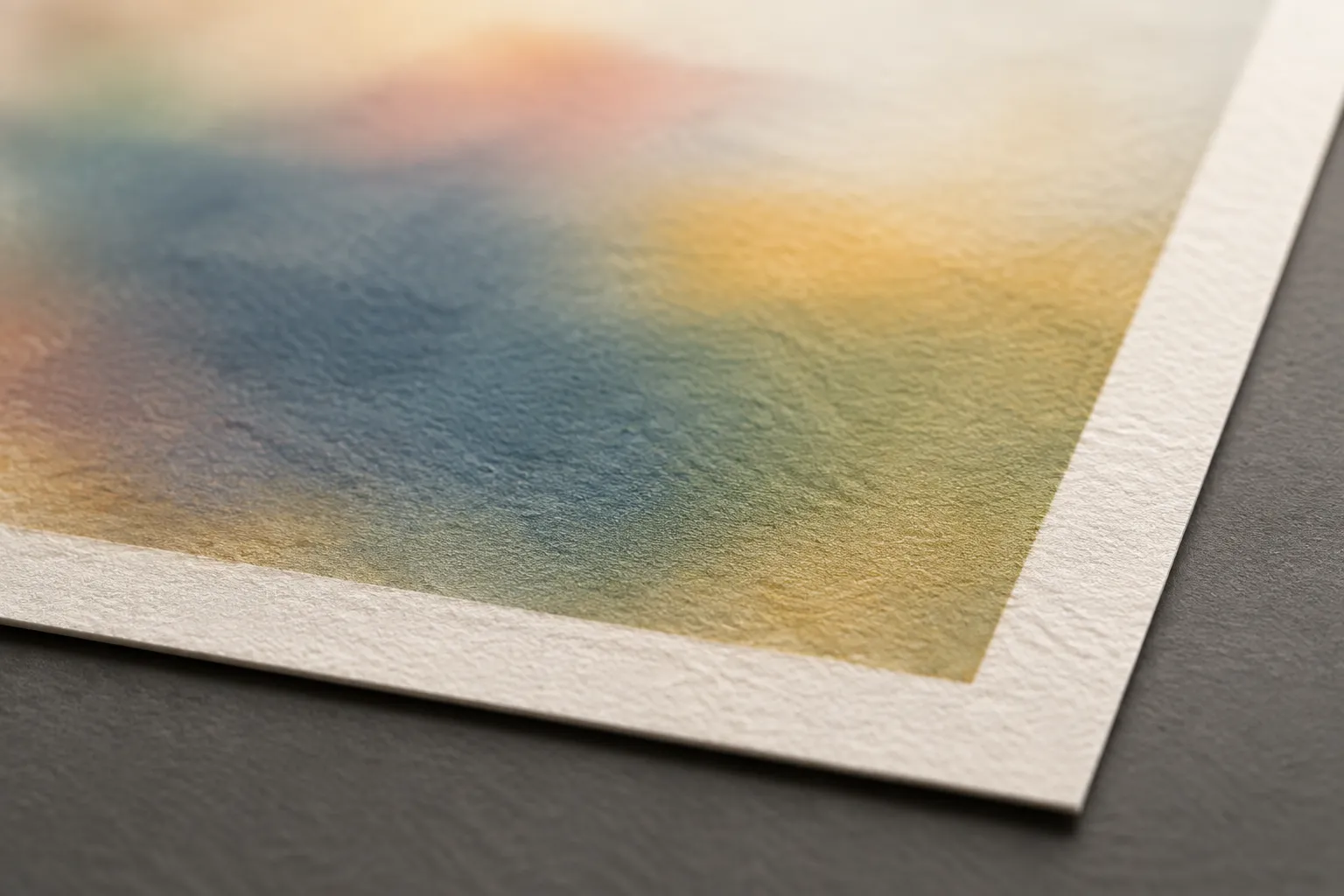
We do not use the word. Our posters are 250 gsm uncoated off-white archival paper, matte and lightly textured, which tells you more than the term would.