Fantasy character ideas that survive a campaign
Most DnD character ideas are a costume and a voice, and both wear out by session three. The ones that last have three things instead: something the character wants, something they are bad at, and a reason to care about somebody else at the table.
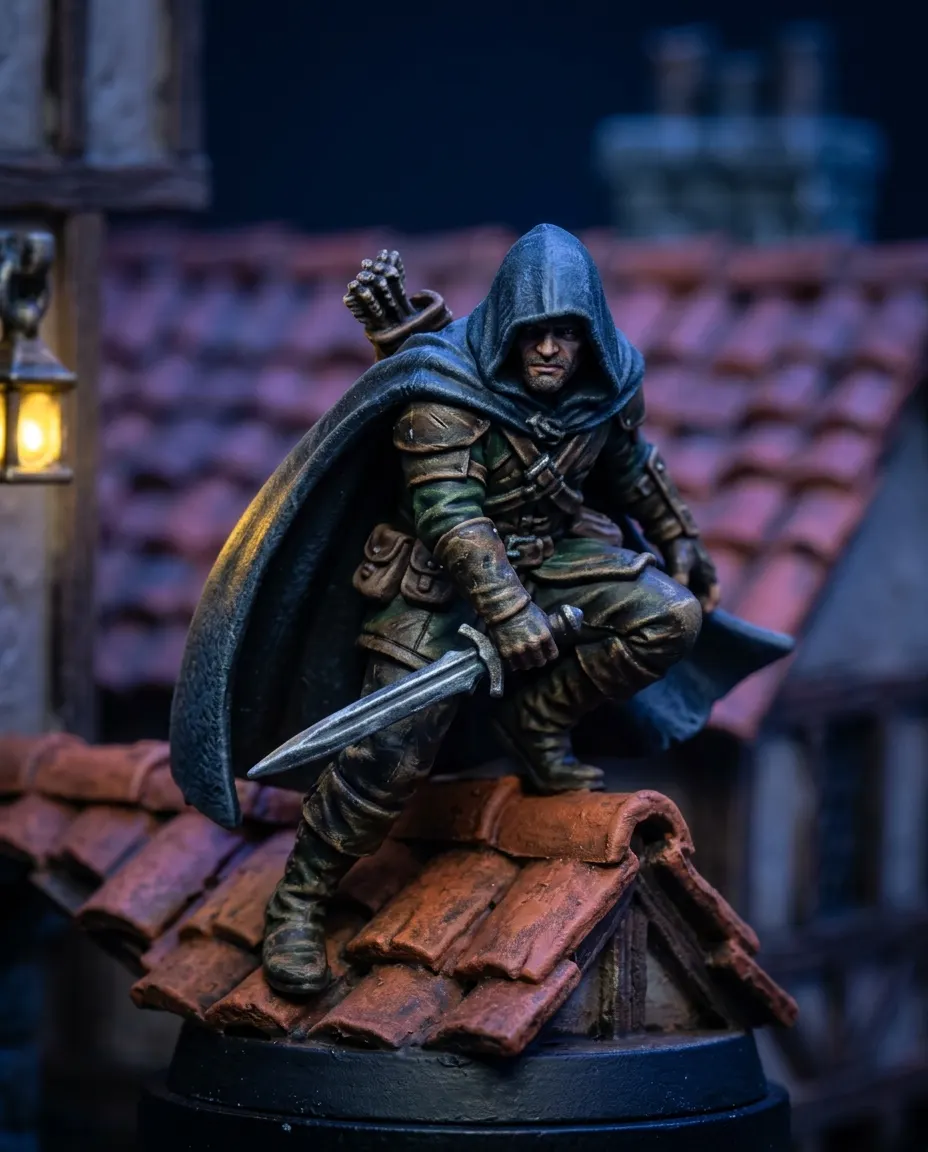
A concept that is only an aesthetic gives you nothing to do on a quiet evening. A concept with a want gives you something to push for in every scene, which is the actual difference between a character you play and a character you describe.
The three-part test
- A want. Concrete enough to fail at. "Find my brother" works; "seek knowledge" does not, because nobody can tell whether you got it.
- A flaw with teeth. Something that costs the party occasionally. A flaw that never inconveniences anyone is a character trait, not a flaw.
- A tie to another player. One sentence connecting you to somebody else's character, agreed with them. This single step does more for a campaign than any backstory.
If a concept passes all three, it will still be interesting in session twenty. If it fails the third, you will be sitting quietly through other people's scenes.
DnD character ideas that start from the wrong end
Try building from something other than race and class for once. A few starting points that tend to produce playable people rather than statblocks:
- A job they were good at. Adventuring is what happened next, not what they trained for. A former cartographer, cook or debt collector has skills and habits that show up at the table.
- A debt. Owed to somebody, or owed by somebody. It travels with the character and the referee can use it without asking you for material.
- A thing they are wrong about. A belief the player knows is mistaken and the character does not. Enormously fun, and it generates scenes by itself.
- Somebody they are trying to become. Or trying not to become, which is the same engine pointed the other way.
Backstory: shorter is stronger
Half a page, with two loose ends and one person still alive. A referee can use that. Six pages of history with every thread closed leaves nothing to pull on, and most of it will never come up.
Keep at least one thing unexplained even to yourself. The gap is where the campaign puts something you would not have invented.
Naming them
A name has to survive being said aloud every week, and shortened by people who are not concentrating. Two syllables travel; apostrophes do not. If nothing suggests itself, the name generator builds names from syllable banks across several traditions, and taking one and changing a letter is a perfectly respectable method.
Campaign and one-shot ideas from the same parts
The three-part test works for a whole table. Give the party a shared want, one thing they are collectively bad at, and a tie to a place - and you have a campaign premise without inventing a world first.
For a one-shot, cut it to one want and a deadline. A single evening does not have room for a flaw to develop; it has room for a decision under pressure, which is a different kind of good.
Playing them once the concept is set
A want gives you something to say in a scene where nothing is happening, which is where most players go quiet. If you do not know what your character would do, ask what they are trying to get and act towards it — that is almost always more interesting than waiting for the referee.
Let the flaw cost you something visibly, at least once, early. A table learns very quickly whether a stated flaw is real, and a character whose weakness has never once inconvenienced anyone reads as a character with no weakness at all.
A note on tables and tone
Agree the register before session one. A character built for tragedy lands badly at a table playing for laughs, and the mismatch is nobody’s fault and everybody’s problem. One sentence in the group chat settles it.
Seeing the character
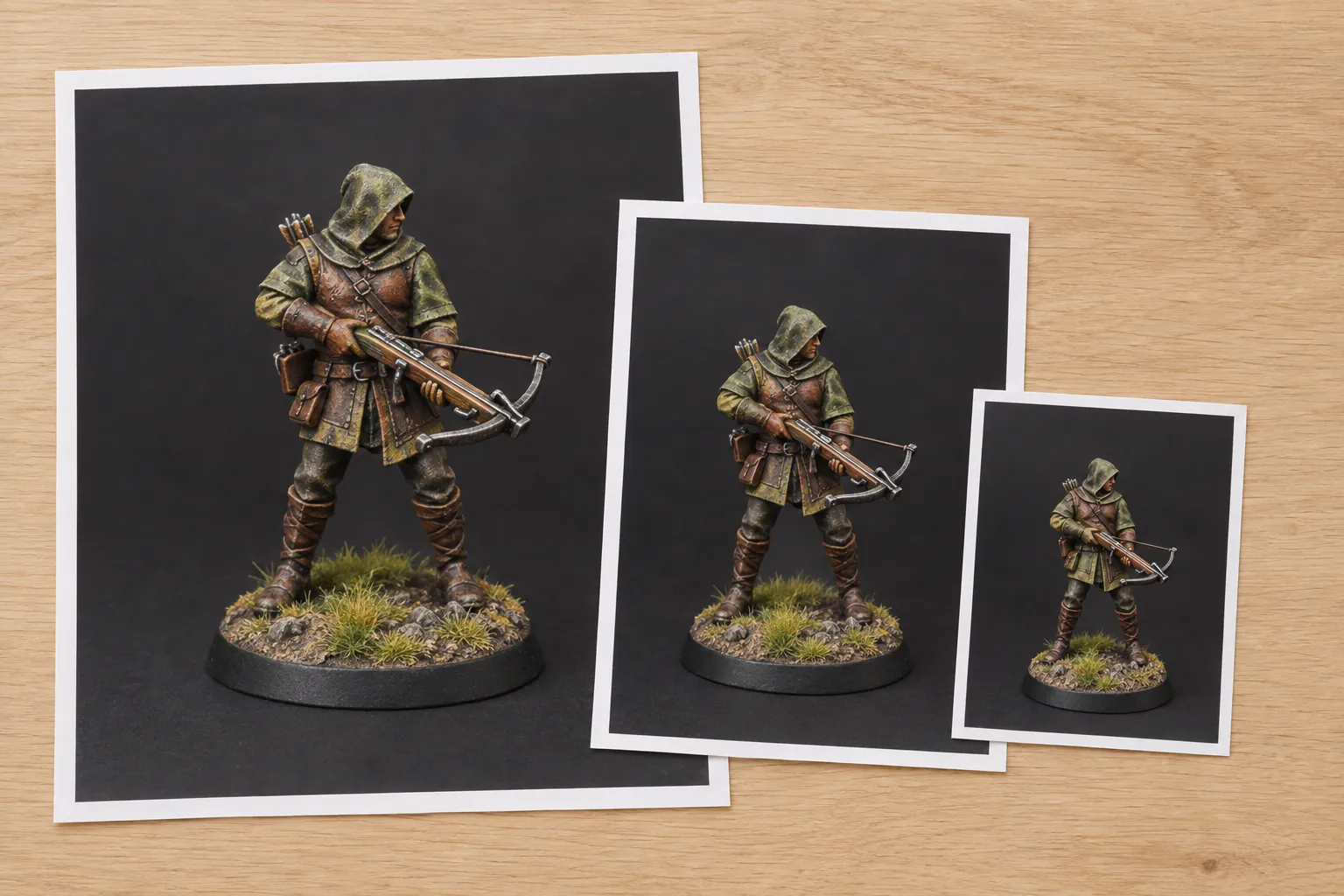
The moment a character stops being notes and becomes a person is usually the moment there is a picture. If you draw, the elf guide covers a head and shoulders from the head ball up. If you do not, the scene studio will build one from a photograph of a painted figure.
Compare the available sizes and prices before ordering. Free UK delivery is included in every price.
Turn the concept into a playable character
For Dungeons & Dragons mechanics, use the official character creation rules and agree choices with your game master. Our fantasy name generator supplies naming ideas. If you paint a model for the character, photograph the whole miniature before creating a print.
Good to know
How do I come up with a DnD character idea?
Start from a want, a flaw that costs the party something, and a tie to another player's character. Race and class are the last decisions, not the first.
How long should a backstory be?
About half a page, with two loose ends and one living person in it. Six closed pages leave a referee nothing to pull on.
What makes a character name work at the table?
Two syllables, no apostrophes, and something that survives being shortened by people who are not concentrating. Say it out loud before committing.
What is a good one-shot premise?
One want and a deadline. A single evening has no room for a flaw to develop, but plenty for a decision made under pressure.