Miniature painting supplies: what a beginner needs and what can wait
Miniature painting supplies come down to six things: primer, paint, two brushes, something to hold the figure, water and a lamp. This guide covers what to buy first, what can wait, and how to shop for someone else.
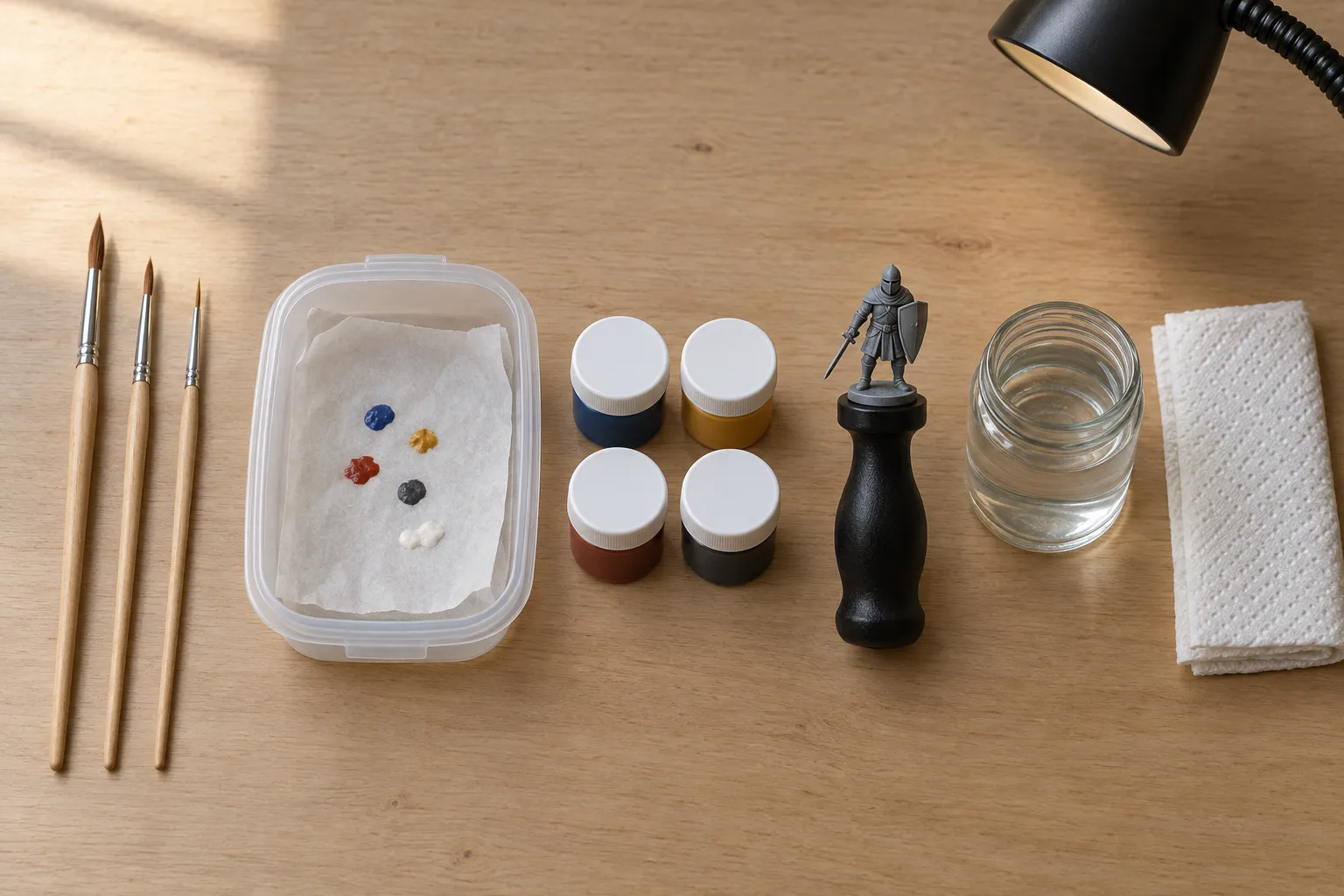
Jump to a section · 8 sections
We don't sell paints, brushes or tools, and no shops or makers are named here. Quotes below come from one hobby paint maker's beginner guides, each linked. Anything unquoted is our own advice.
Miniature painting supplies in the order to buy them
Spread the spending out and you find out whether you enjoy the hobby before you've paid for parts you'd never touch. Six things get you painting.
- Primer for the figure: a thin first coat that gives paint something to grip, so it doesn't bead or rub off bare plastic or metal.
- Two brushes: a medium one for covering areas and a small pointed one for eyes, edges and detail.
- A small set of paints: enough colours for one figure, so you learn mixing and thinning before you own a hundred pots.
- Something to hold the figure by: a handle, a cork or an old pot, so your fingers stay off the paint while it dries.
- A water pot and a paper towel: for rinsing the brush and taking excess paint off before it touches the model.
- A lamp you can point at the work: steady, daylight-coloured light, so the colours you mix are the colours you see later.
Everything else waits until a figure gives you a reason. The sections below take the six in turn, then sort out what to skip.
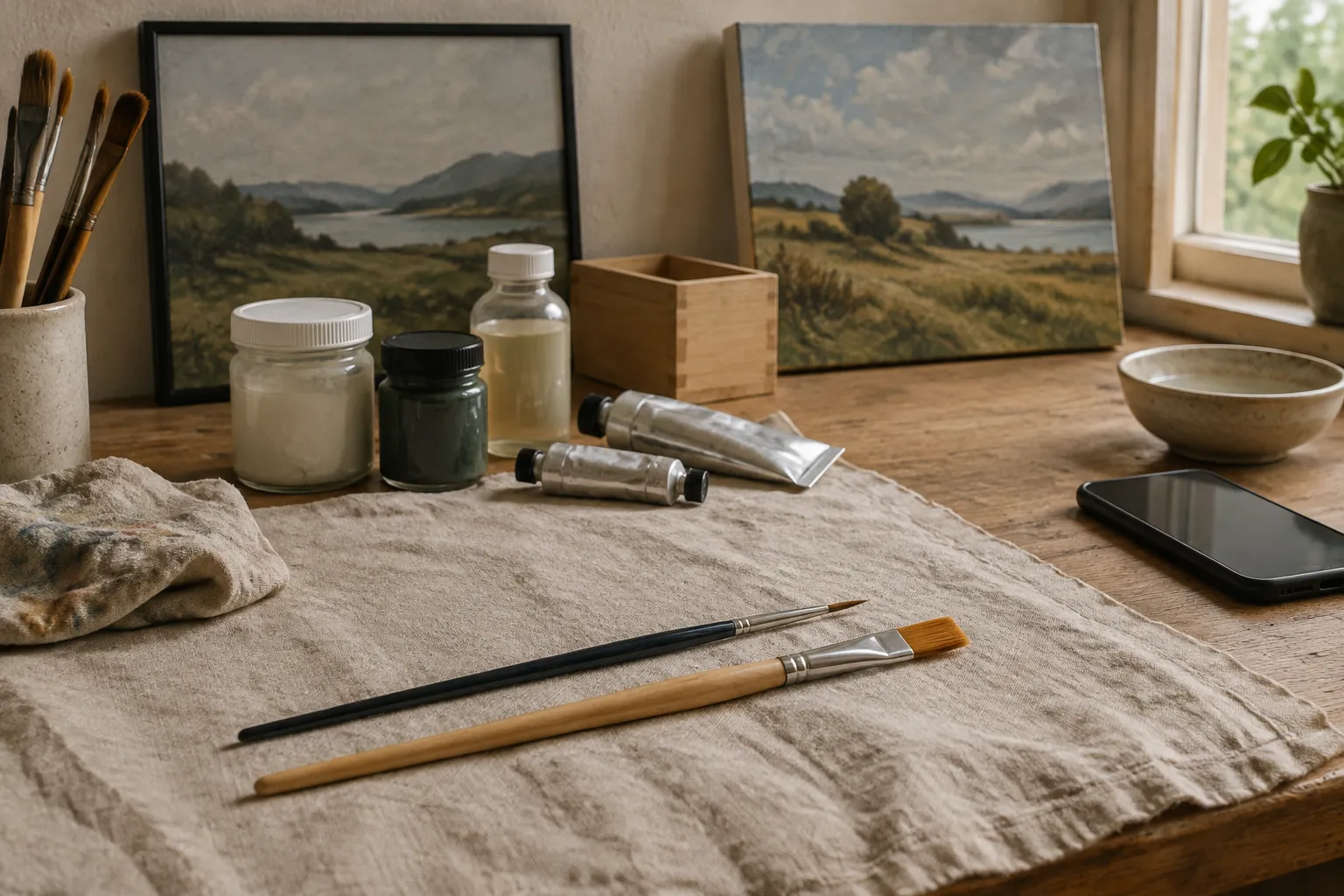
Brushes: start with two
A paint maker's guide to a first setup opens its equipment list with brushes: "Good brushes are essential, and it is a good idea to have a selection of different types and sizes for your different tasks." Its own starting point is two. One holds paint well, because "the body of the bristles can hold a large amount of paint, while still maintaining a point", so it covers big areas and still does careful work. The other is for "the finer details where you have to be precise and sharp, and where small applications of paint are desired".
The same maker's brush guide suggests more once you're settled, "around 4-5 brushes of various sizes". Our view, and ours alone: begin with the two, and buy the next one when a particular job on a particular figure won't go right with what you have.
On spending, the brush guide says "If you are unsure whether miniature painting is for you, I would consider starting with more affordable options". It follows with "Once you've caught the mini painting bug you can start investing in higher-quality brushes." That's a sensible order: keep it modest while you're finding out, then buy better once you're sure.
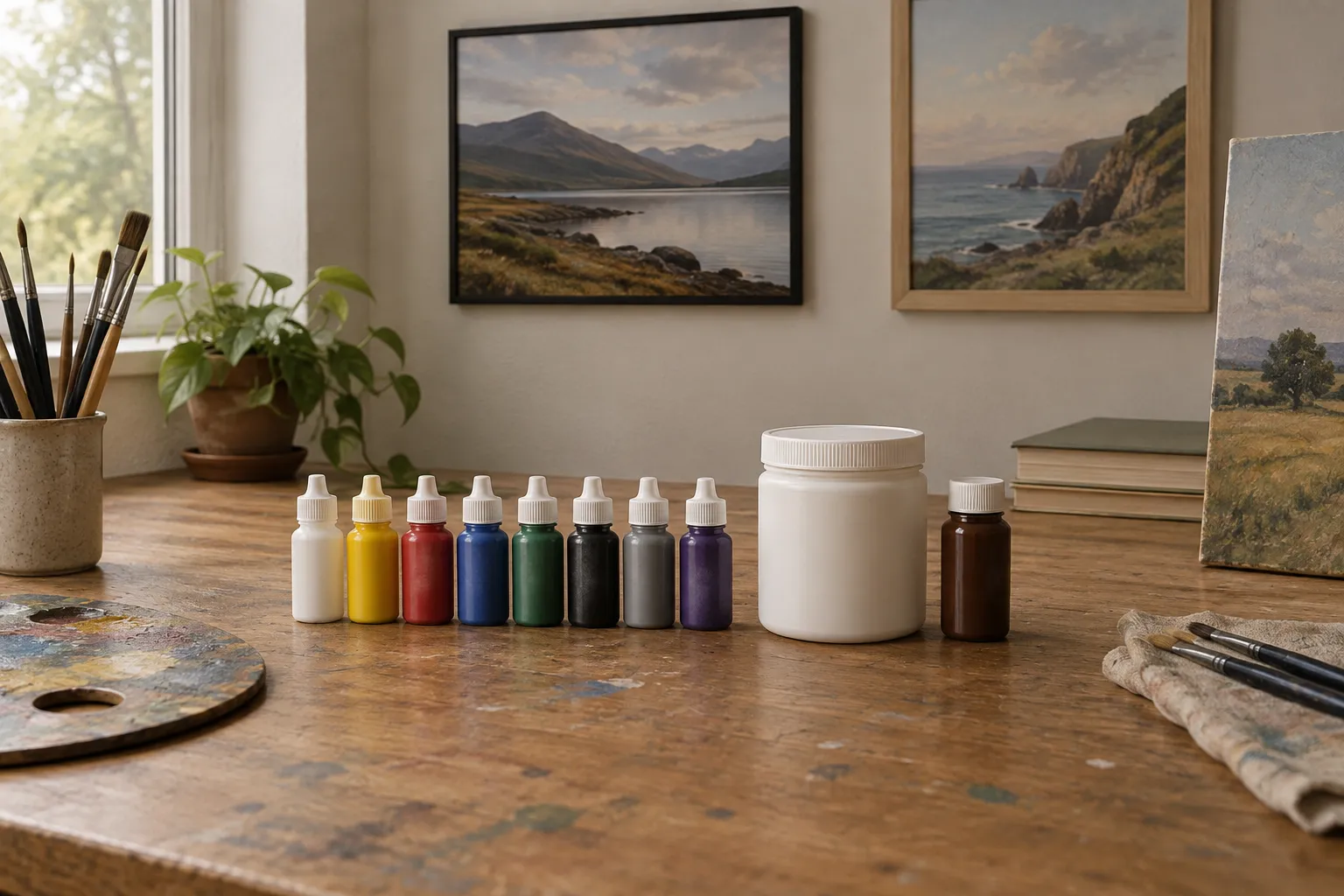
Paint and primer: a small set, not the whole range
Choice is the trap. The first-setup guide admits "When building your paint collection, it’s easy to get overwhelmed with the sheer choice of colours available". Its answer is a starter set holding "your fundamental colours, a brush on primer, and a wash", after which "you can add on a bigger set, or hand pick the individual colours you want to expand your collection as you see fit". That is a maker describing its own set, so treat it as a description of what to look for, not a recommendation from us: a handful of basic colours, a primer and a wash, not a rack of pots.
Primer earns its place. Without it, the guide says, "the paint won’t adhere to the figure and will be more prone to chipping and flaking off". If you choose an aerosol primer, the maker's priming guide adds a safety line worth acting on: "always spray in a well-ventilated area and follow the safety instructions on the can." How much to apply and how long to wait is in how to paint miniatures.
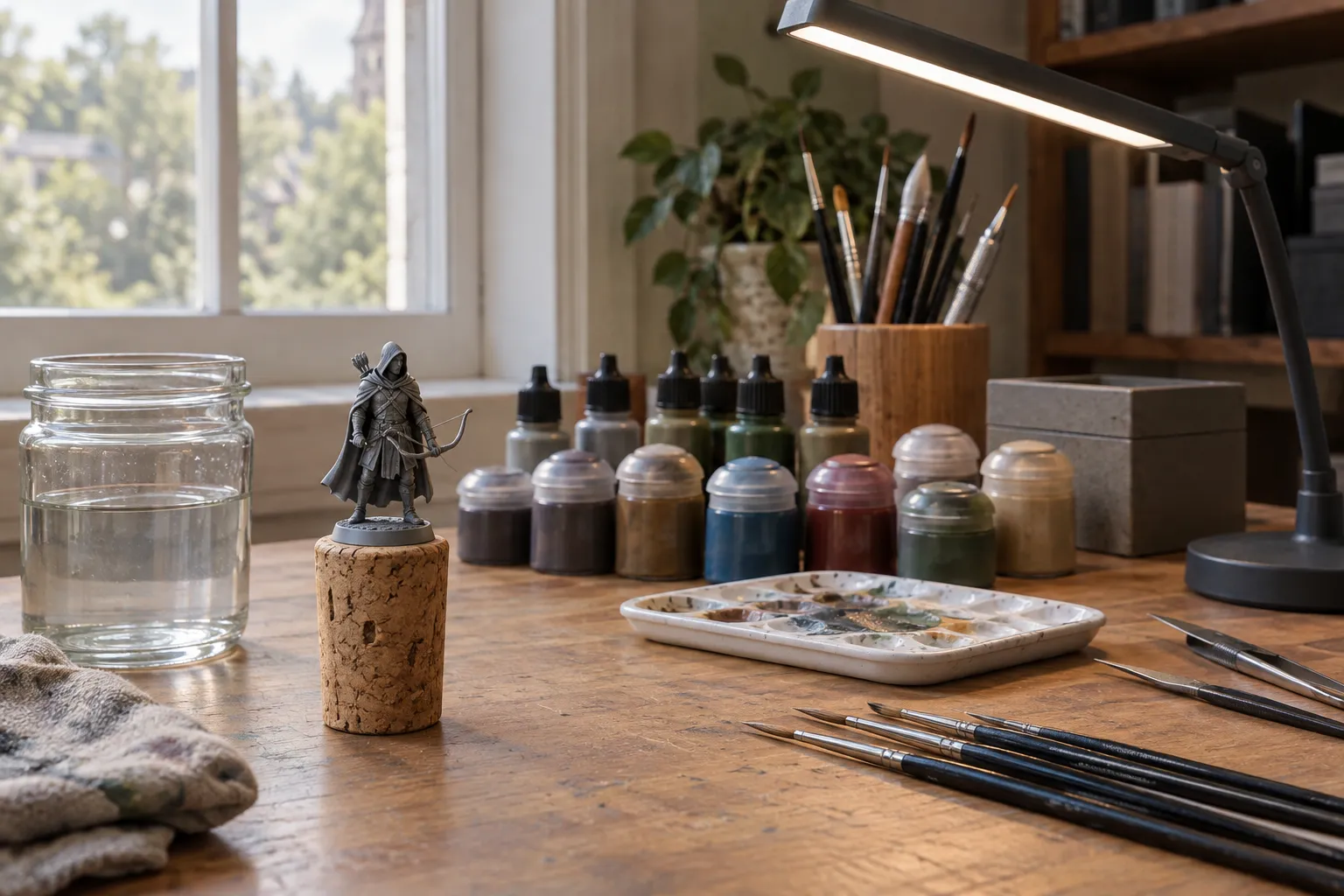
A handle, a water pot and a lamp
The first-setup guide gives each of these a line.
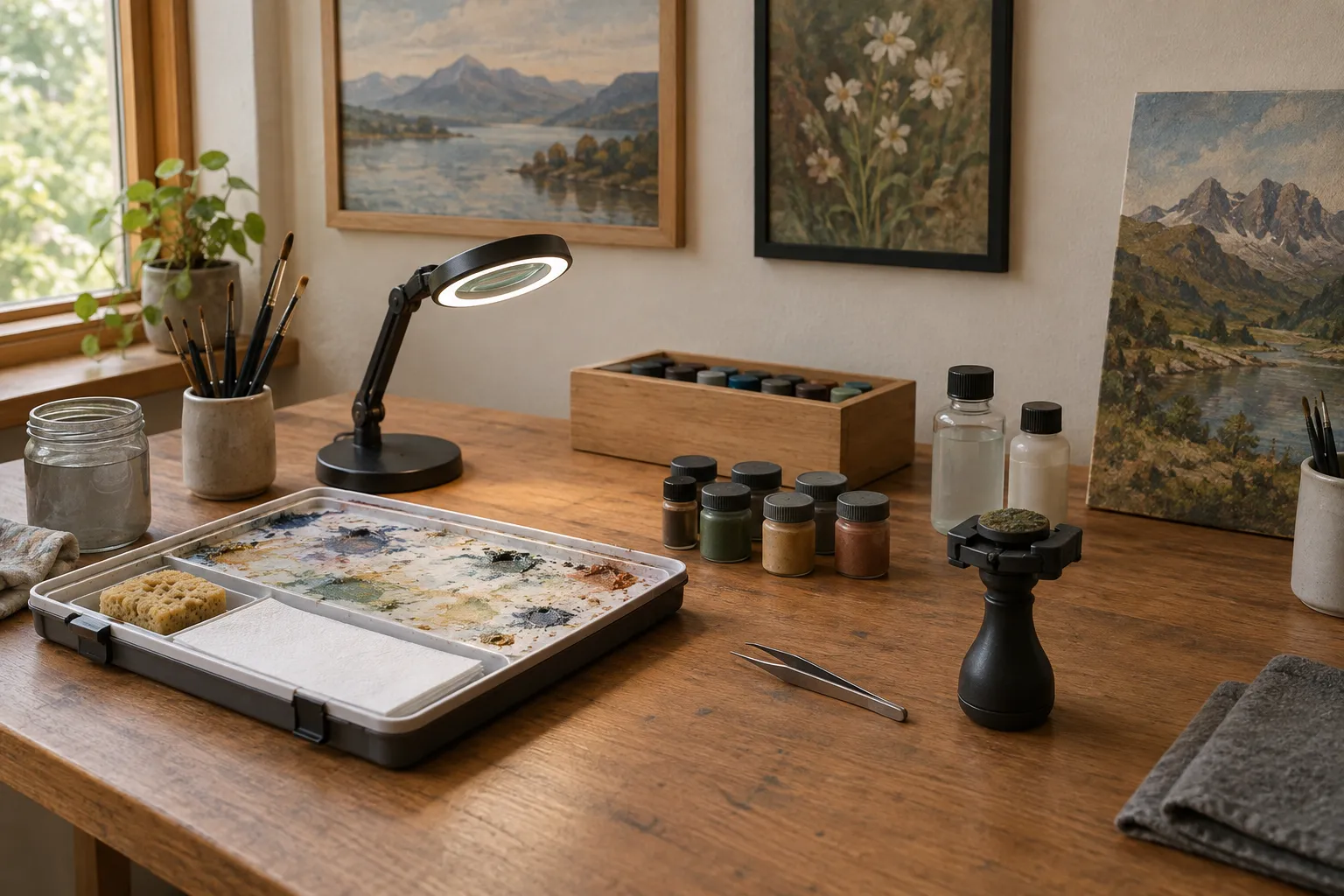
A handle comes first. Sticking the figure to one "gives you greater stability and control and reduces the chances of accidentally touching the miniature while the paint is wet". A wine cork, a pill bottle or a spray paint cap can all work, the maker says, so a dedicated painting handle is a choice and not a requirement.
Water needs a pot that stays put. The guide wants "fresh, cold water (warm water is bad for the bristles!)" and suggests a heavy glass or porcelain container that's harder to knock over. Keep it clearly apart from the mugs you drink from. A paper towel or cloth beside it is for blotting the brush.
The maker singles out lighting as something "often overlooked". On lamps the guide says "a standard desk lamp can work", with a condition: "It should preferably be pure or white light, as a yellow light makes it harder to see the colours correctly." A daylight bulb in a lamp you already own qualifies, it adds.
Nice to have, and fine to skip
Some kit looks like a starting requirement and isn't.
- A wet palette. Of its own wet palette the maker's guide says "This is not absolutely necessary", though it "makes it easier to work with the paint, as it extends the worktime of the paint by keeping it hydrated." Start on any smooth surface and see whether paint drying on you bothers you. If it does, our wet palette guide shows how to make one from a takeaway tub.
- A cutting mat. The guide says "It’s a good idea to protect your workspace from spills as accidents can happen when handling paint". It recommends a self-healing mat for that job and falls back on "a coaster or old newspaper" for extra cover, so newspaper is an acceptable start.
- An airbrush. Leave it for later. The maker's airbrush guide warns of "the new gear, terminology, and techniques you’ll need to learn". It says "The most important thing you need is an air supply." It also says "it is highly recommended to use some sort of ventilation to catch the atomized paint that does not hit the model when you spray". That's an air supply and ventilation before you've finished a figure, which is our reason for skipping it at the start.
- A hobby knife. Worth having only when a figure has seams to scrape away, which how to paint miniatures explains. Keep the cap on whenever it's not in your hand.
- Storage and display. Both can wait until there are finished figures to store.
Looking after the brushes you buy
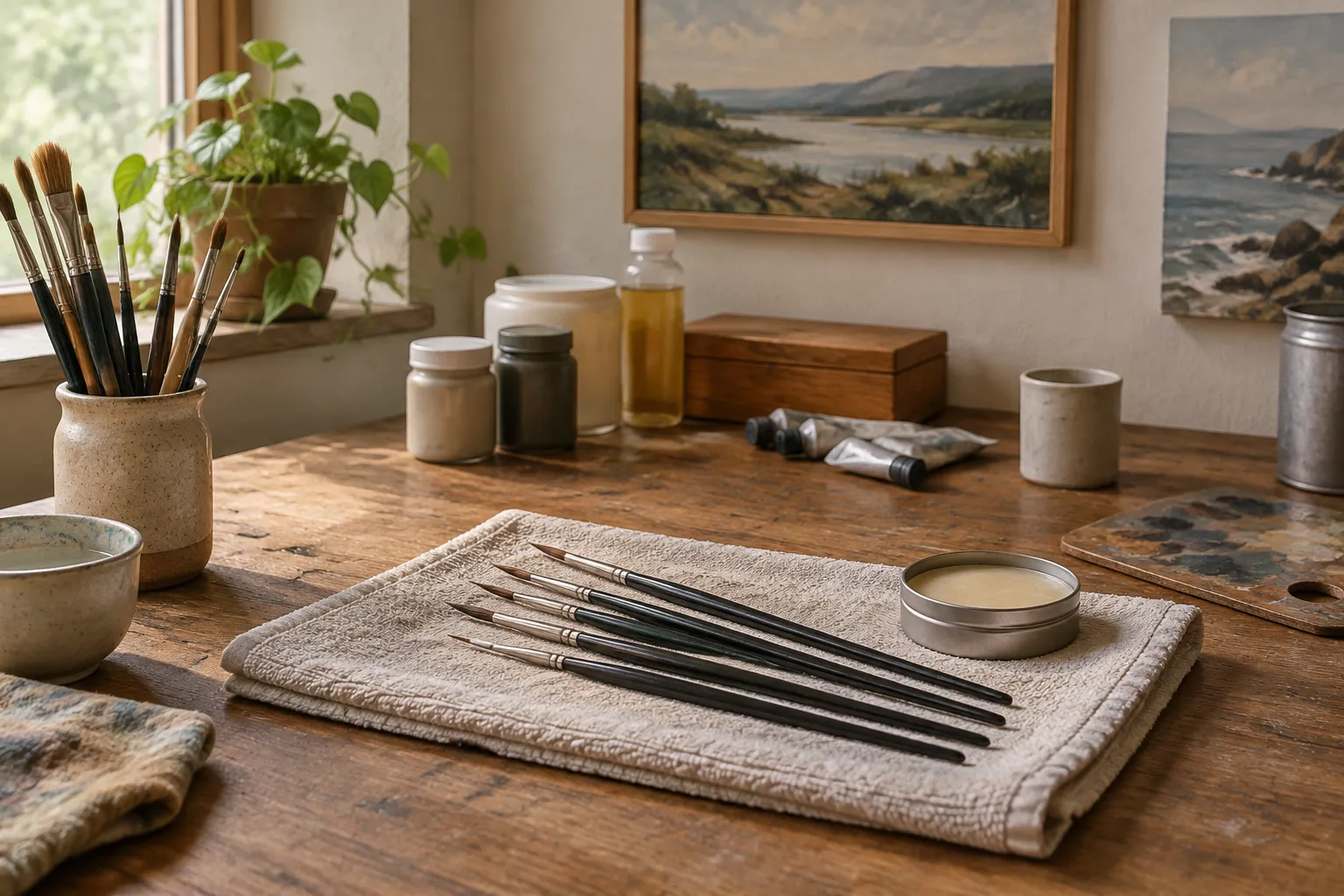
Three habits from the brush guide make the first two last. Keep paint off the ferrule, "the metal part of the brush that connects the bristles to the handle", because "If paint seeps into the ferrule, the paint hardens and causes the bristles to splay outwards." Clean them in cold or lukewarm water, since the guide says never use hot water to clean your brushes: "The glue that holds the bristles together can soften under high temperatures, leading to bristle loss and a frayed brush tip." And once they're clean, "Don’t place the brush bristle-down in a jar or cup". To bring the point back, its advice is to "roll the brush on a damp cloth or paper towel instead of using your mouth".
Buying miniature painting supplies as a gift
From the outside you can't tell which paints or brushes someone already owns, so ask before buying consumables for a painter of any experience. Items that need no matching are safer: a lamp with a daylight bulb, a painting handle, a brush of a size they've mentioned. For a beginner, the six-item list above is a fair shopping list. If they're starting a game as well as a hobby, wargaming for beginners explains what the rest involves.
For a present that isn't kit, gifts for miniature painters covers a print of the figure they've finished, and what to check with them first. It's not repeated here.
After the last coat
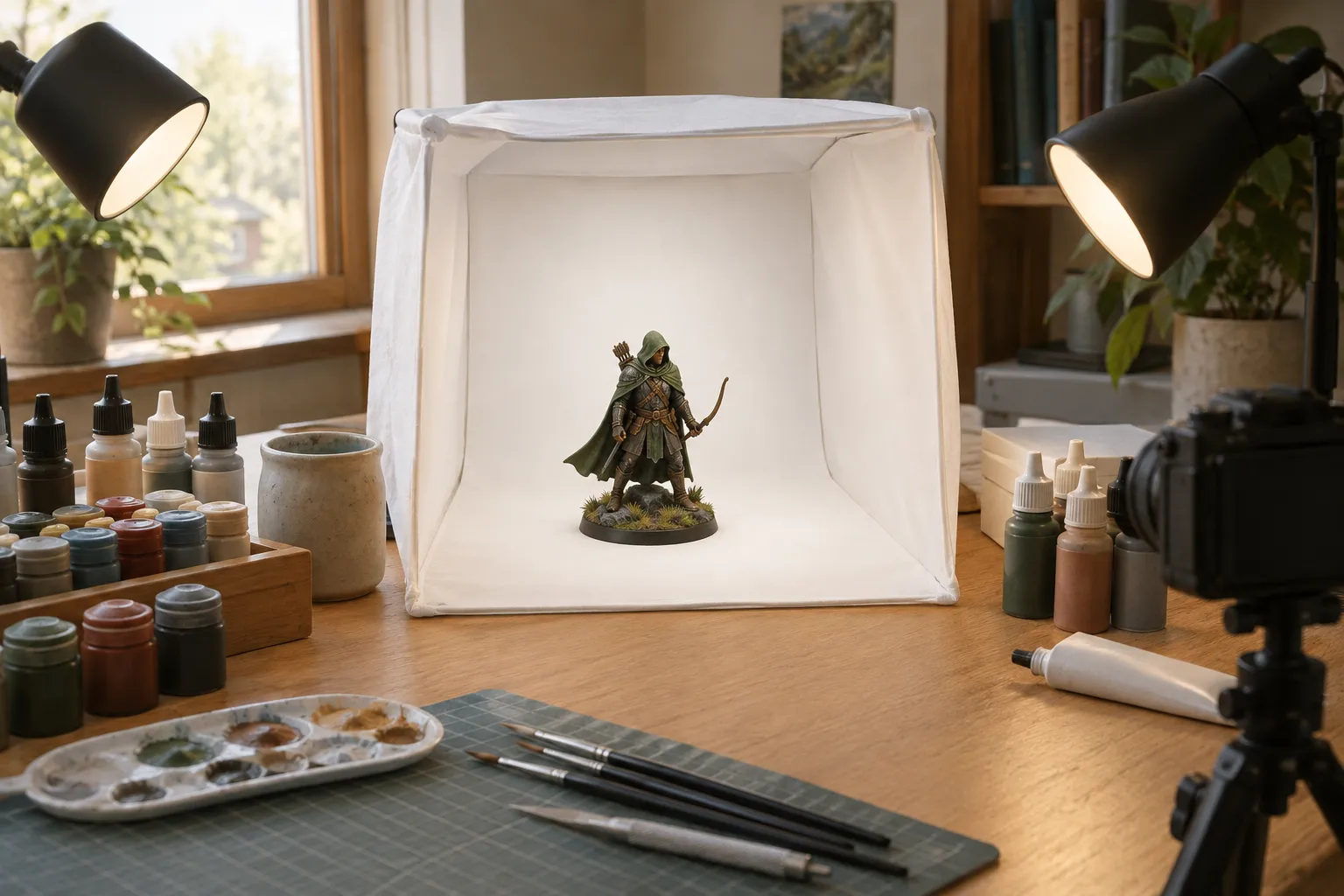
Every item above exists to get one figure across the line. Photograph it next; photographing a miniature shows how to get a sharp, evenly lit shot. From a sharp photograph you can print the picture or choose a framed print. If picking colours is what's holding you back, paint scheme ideas is the next read.
Questions and answers
What do you use to paint miniatures?
Acrylic hobby paint, a primer, a couple of brushes of different sizes, and a few things around them: a handle for the figure, a water pot, a paper towel and a lamp. This page follows a paint maker's guides, which are written for acrylics. The order to buy it all in is at the top of the page.
What to get for miniature painting?
If you're buying for a beginner, start with items that need no colour matching, such as a lamp with a daylight bulb, a painting handle or a brush. Ask before buying paints, because you can't see what they already own. Our gifts for miniature painters guide has ideas that aren't kit.
What can I use instead of a wet palette?
Any smooth surface will do to begin with. The maker's beginner guide calls a wet palette "not absolutely necessary". If you want the effect without buying one, the wet palette guide on this site builds one from a takeaway tub.
What are some essential accessories for painting?
Something to protect the table, a heavy water pot and a paper towel. For long sessions the first-setup guide from the paint maker adds "adjusting the chair and table height" so the work sits at a comfortable distance.
Do I need an airbrush to start miniature painting?
No. It adds an air supply and ventilation to the kit list, and the maker's own airbrush guide lists both. Ordinary brushes are enough for a first figure. This question is author-written, from the airbrush searches in our keyword data.
How many brushes do I need to paint miniatures?
Two to begin, in different sizes, going by the maker's first-setup advice. Its later brush guide suggests around four or five once you're settled. Add one when a specific job needs it. This question is author-written, from the brush-size searches in our keyword data.
What is the best starter set for miniature painting?
We don’t name makers, so we can’t pick one, but you can judge any set against the six things at the top of this page: primer, two brushes, a small set of paints, something to hold the figure, a water pot and a lamp. A set without primer needs a can added, and a set with only very small brushes needs one that holds more paint. Buy the missing pieces separately, not a bigger set.